“You need to get this kid into an art class” was the phrase told to RF Pangborn’s mother by his fifth-grade teacher. And as any mother would, she enrolled her talented son into an art class in the next town over. But, this wasn’t the only training Pangborn received. He also met mentor Charles R. Nevad. Teaching Pangborn the mere fundamentals was never the focus for Charles. The artist recalls Nevad’s sessions with great clarity. Pangborn says, “very little was made about art technique except that once in a while he would displace you at the easel and tweak your work offering some critique.” Oftentimes, Nevad read books, chatted about philosophy and homemade bread. The time with Nevad is looked back with kindness and the core values he demonstrated. Due to this, Pangborn developed the art form through the empathic lens, leading to a trifecta of events in his artistic career.
As he grew into adolescence Pangborn found painting as a haven. “There was a lot of tension in the house during those times and I spent most of my middle and high school days locked away in my room drawing up my own worlds and characters.” Although there was a bit of turbulence in Pangborn’s life, the fundamentals were still there.
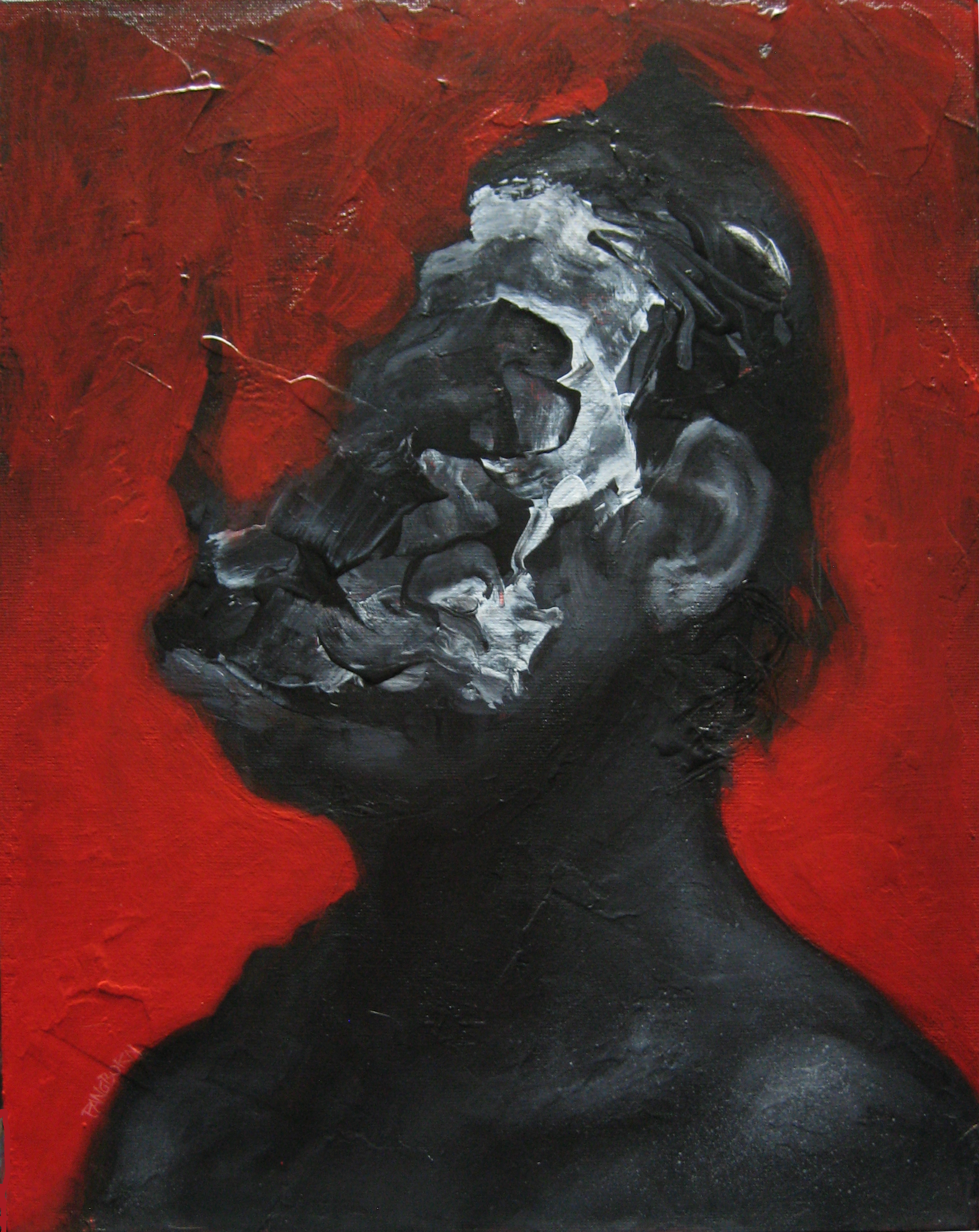
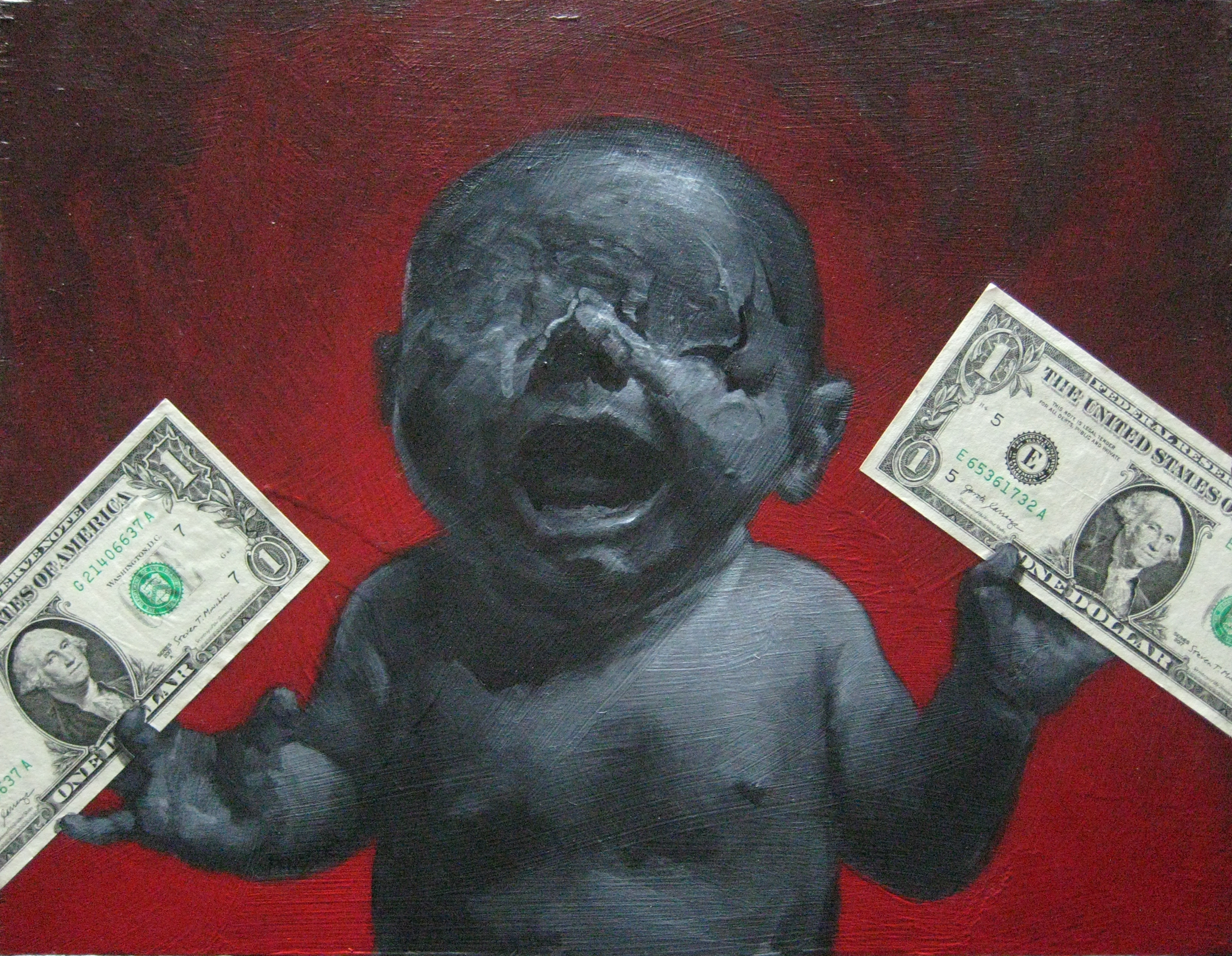
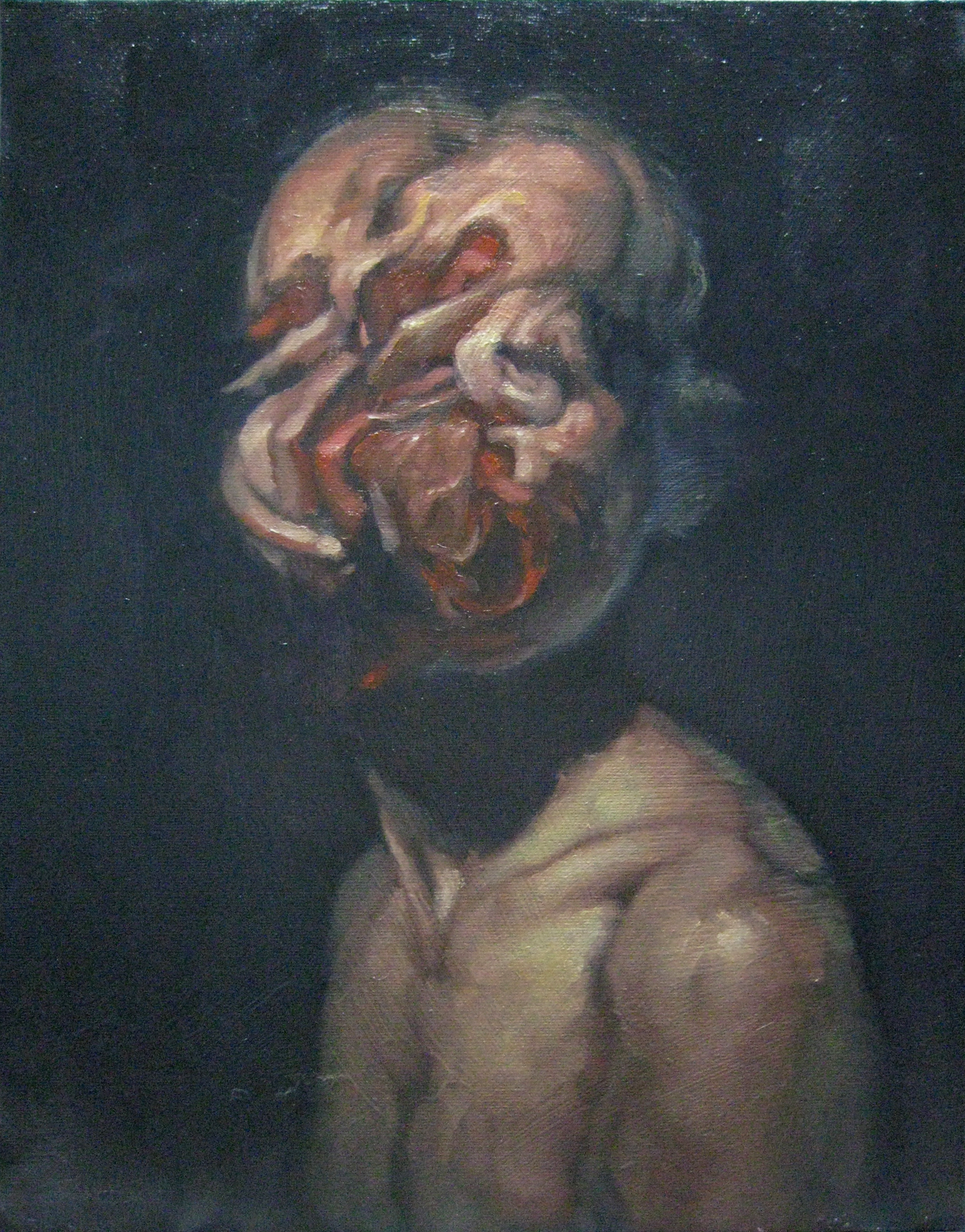
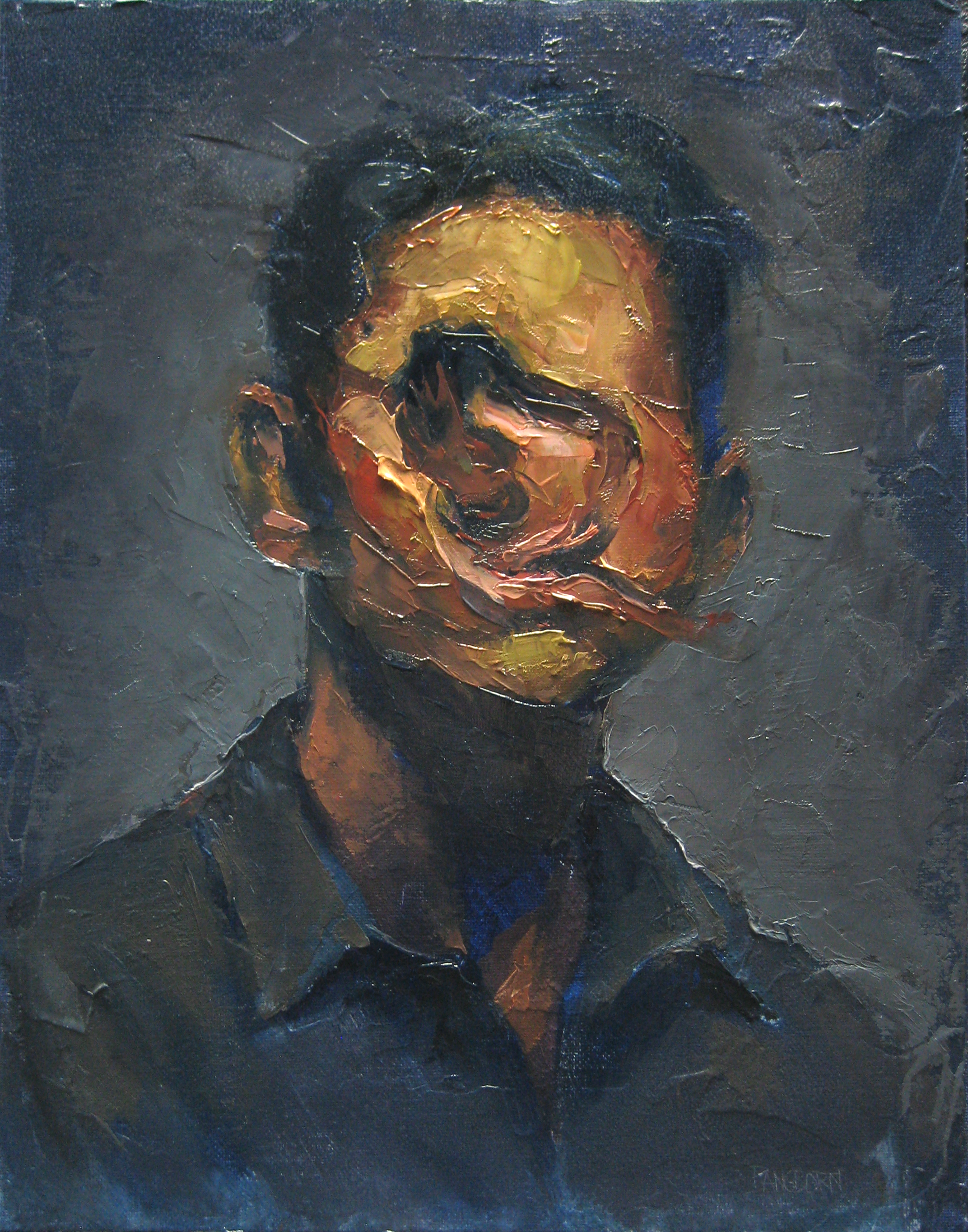
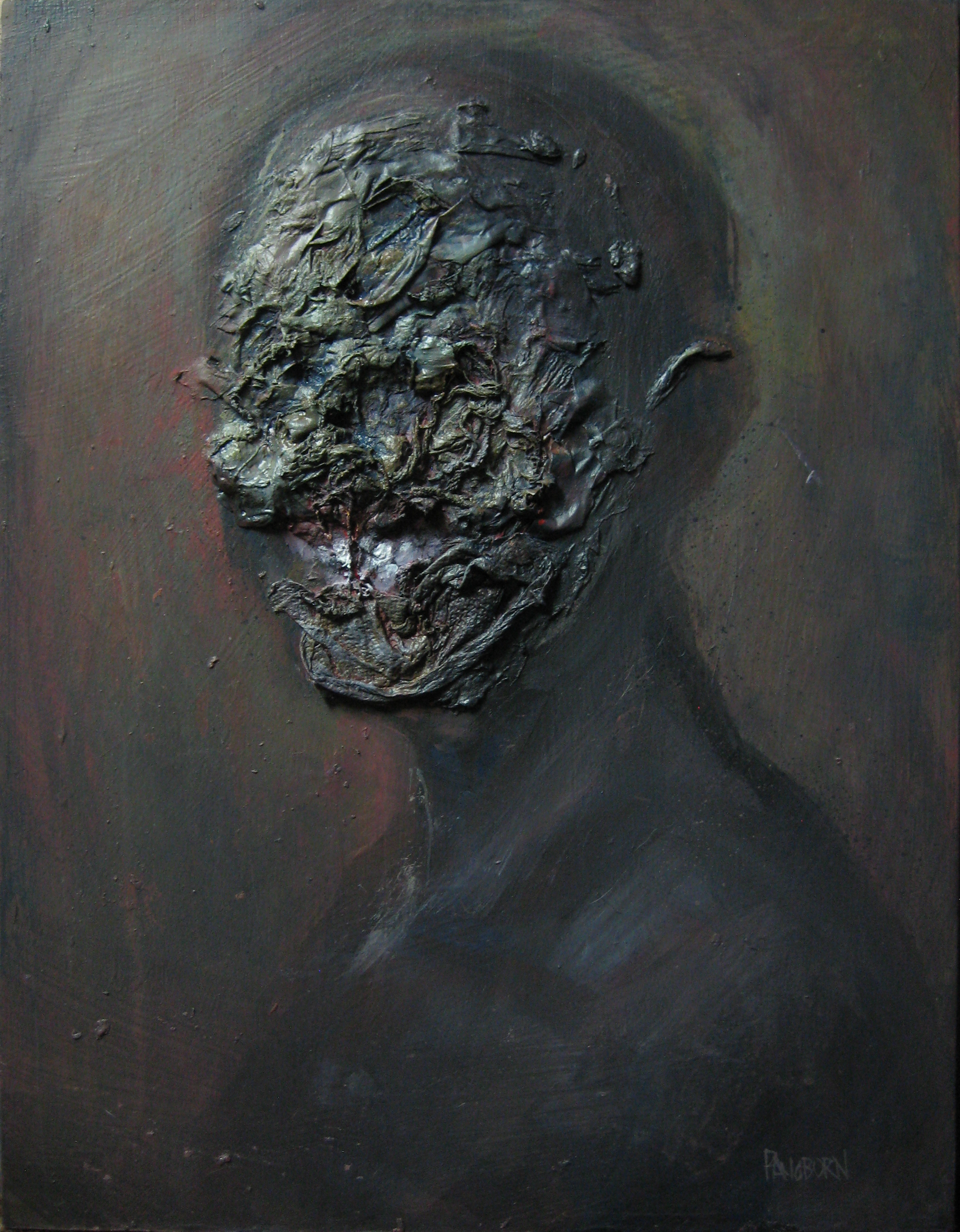
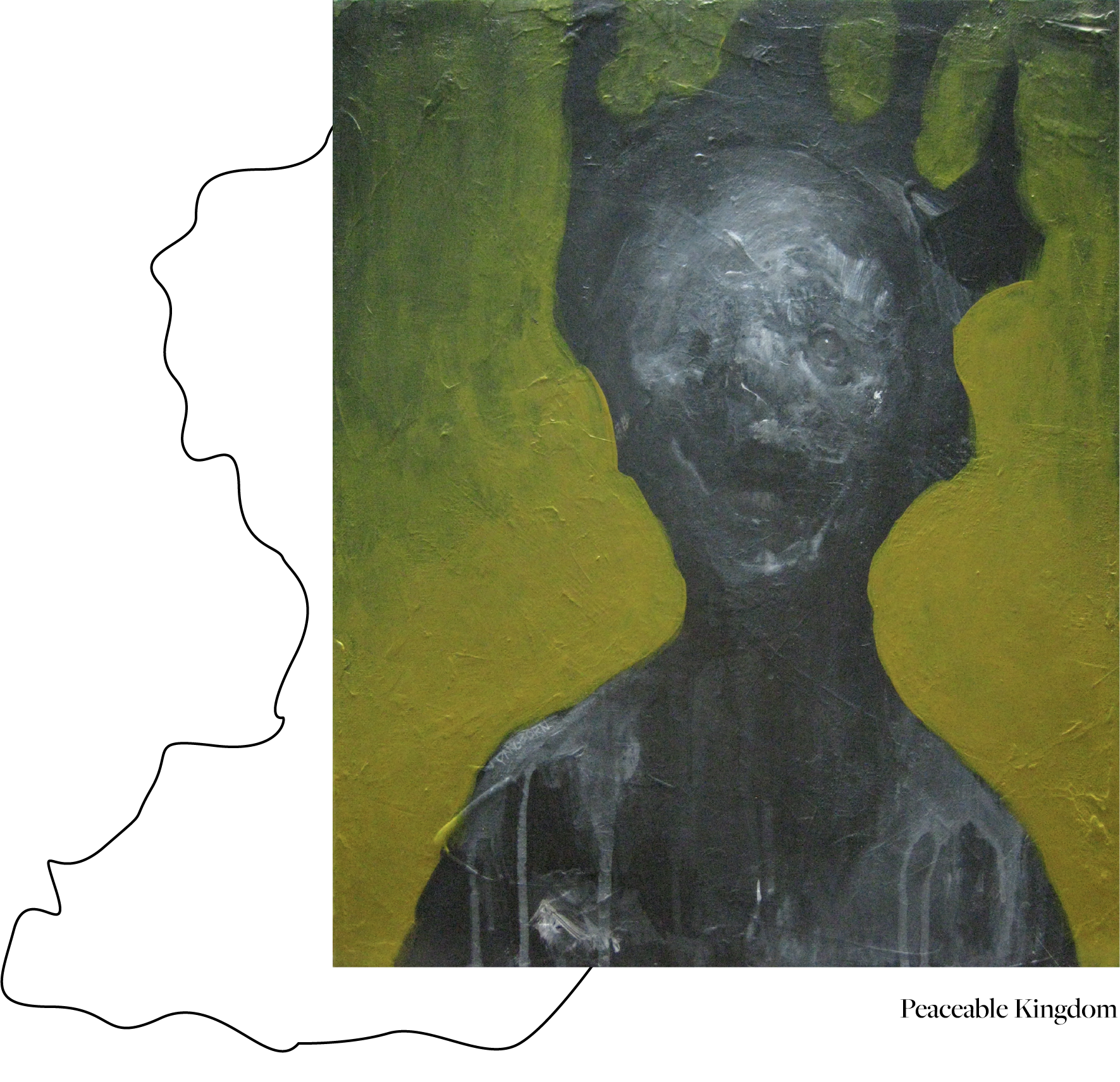
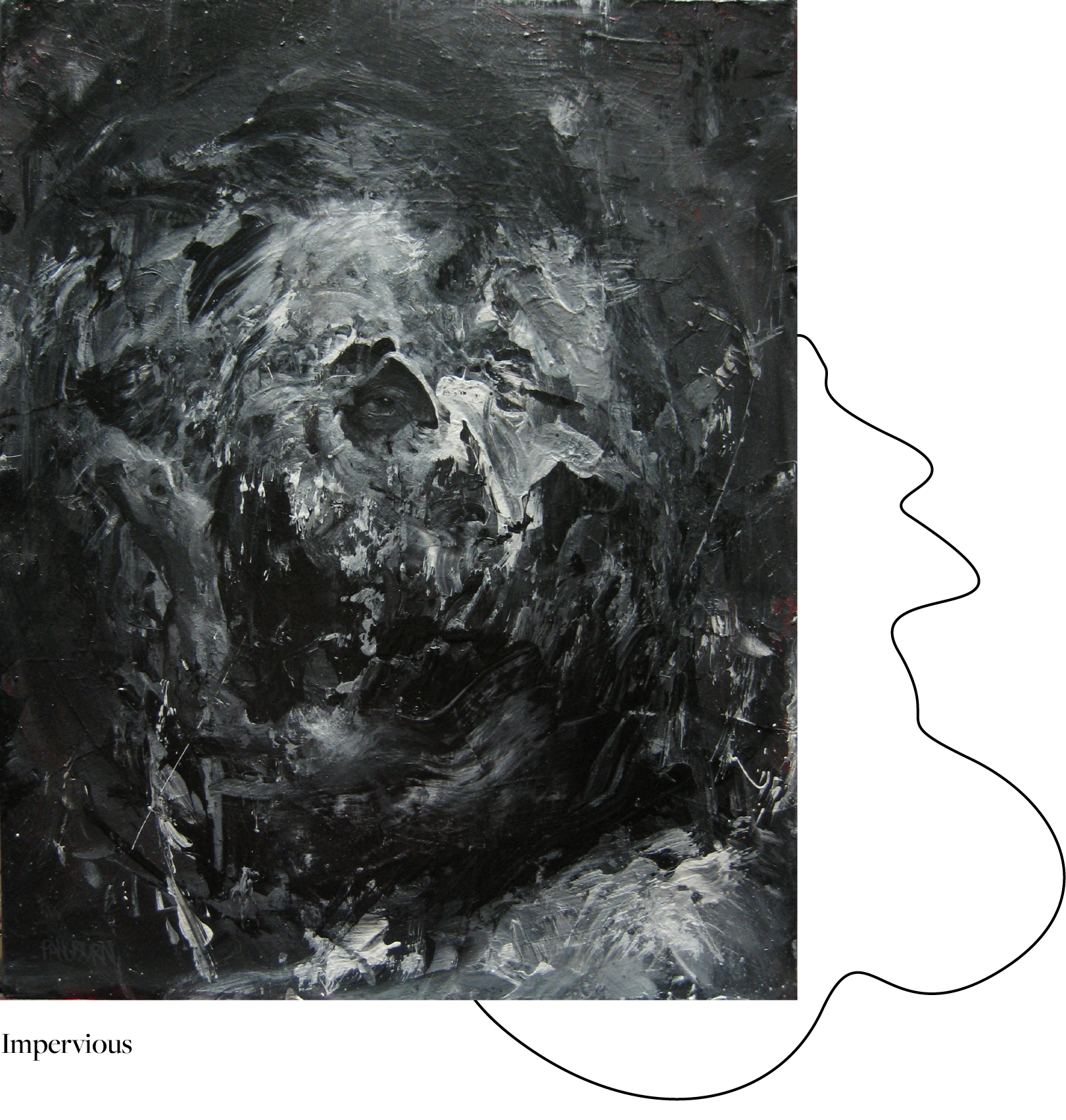
Pangborn’s has a very specific style. It dances with traditional compositions yet goes down a meticulous path of mangled ambiguity. Pangborn lays out his technique as time-honored disfigurements. He says “the traditional grounds of the painting give it sort of a universally relatable visual anchor. The disfigurement on the other hand will only speak to a few. It's like a secret code. I mar the expression, sometimes for hours, until I see something that hits home with me.” It is fused with his woes, and sometimes gaping wounds. Wounds that only he can translate. “I would say in very much the same way as keeping an intimate diary does.” As like any diary entry Pangborn plays as a surgeon, draining the negative energy” and “encapsulates it into a rectangular theatre where it can be observed in the light.” He is the chief surgeon of the things not talked about. “It is like taking off a band-aid, seeing the disgusting and putrid wound. Unpleasant sometimes, but now that things are out in the open, we can drain the wound (paint it) and then clean it (title it with honesty).” Pangborn gains liberty rights to express his emotions without judgment from onlookers.
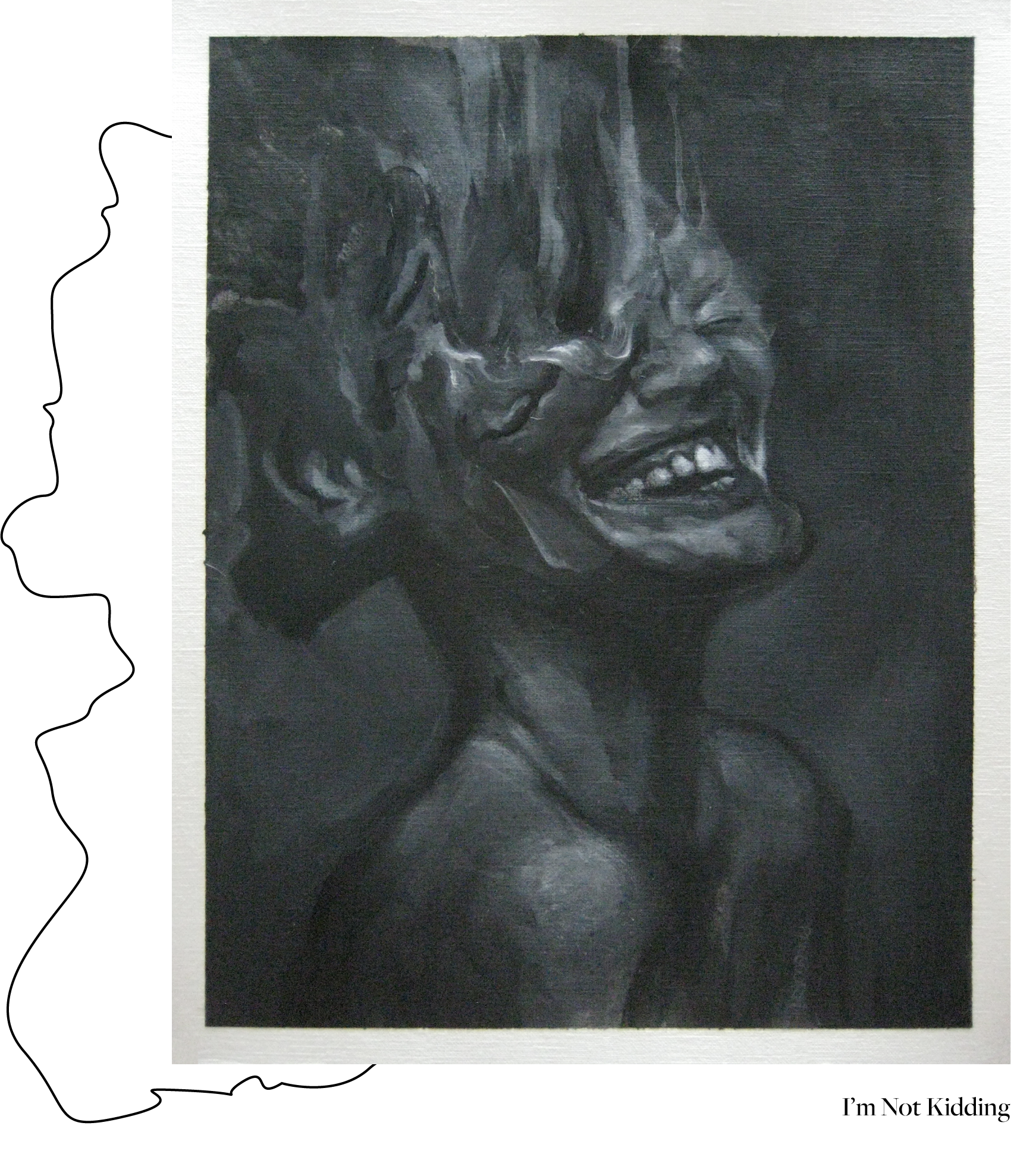
Pangborn’s paintings are a railway of communication in a unique sense. Globs of paint along with wide-angled strokes make up his disfigured masterpieces. Each piece sings an unequivocal tune. "They only say specific things to me and those things are incredibly personal.” They are directly linked to him personally but often correlate a familiar dialogue to the viewer. Pangborn says if “Someone else or themselves have had a similar life experience... we have connected in that way.” Alternatively, Pangborn also shares an intrinsic connection that is not always a definitive point. Their interpretations almost become a therapy session, with the viewer left to speculate the lack of clarity of his perspective. In conclusion, the interpretation process becomes a cat and mouse game to piece the dots together and make it their own. The painter relates it by “not nailing down all of the specifics” within this approach Pangborn leaves “some things open to interpretation by the viewer, the image becomes a sort of inkblot test. You will have to look inside yourself for the meaning.”
Even so, Pangborn’s paintings are angelically demonic in nature, which ruminate on his existence of emotion. But also possess a rather nostalgic element to the human experience. These attributes help Pangborn create a symbiosis between himself and the viewer. “It opens your eyes to the fact that you are never alone in your sufferings, your problems, your struggles. Your troubles are nothing new or unique. Life hasn't singled you out one way or another.” Each painting showcases pieces of him and the therapeutic process that translates onto canvas.
To sum it up, Pangborn has been seasoned in his analeptic journey. Throughout his years he has faced many outlets to cope with life. "I self-medicated in all manner of ways over the years for crippling social anxiety and intermittent periods of prolonged depression. Drinking or doing drugs are very effective treatments but ultimately they are not a cure.” Although turbulent, Pangborn found a peaceful stillness with art. “I get the relaxation and distraction that comes with creating something, which is priceless.” The creation process for Pangborn gives a heroic archetype, allowing him to confront the skeleton in the closet. “You sit face to face with the thing that is screaming to be addressed. You don't run from it. You let that conversation take place."
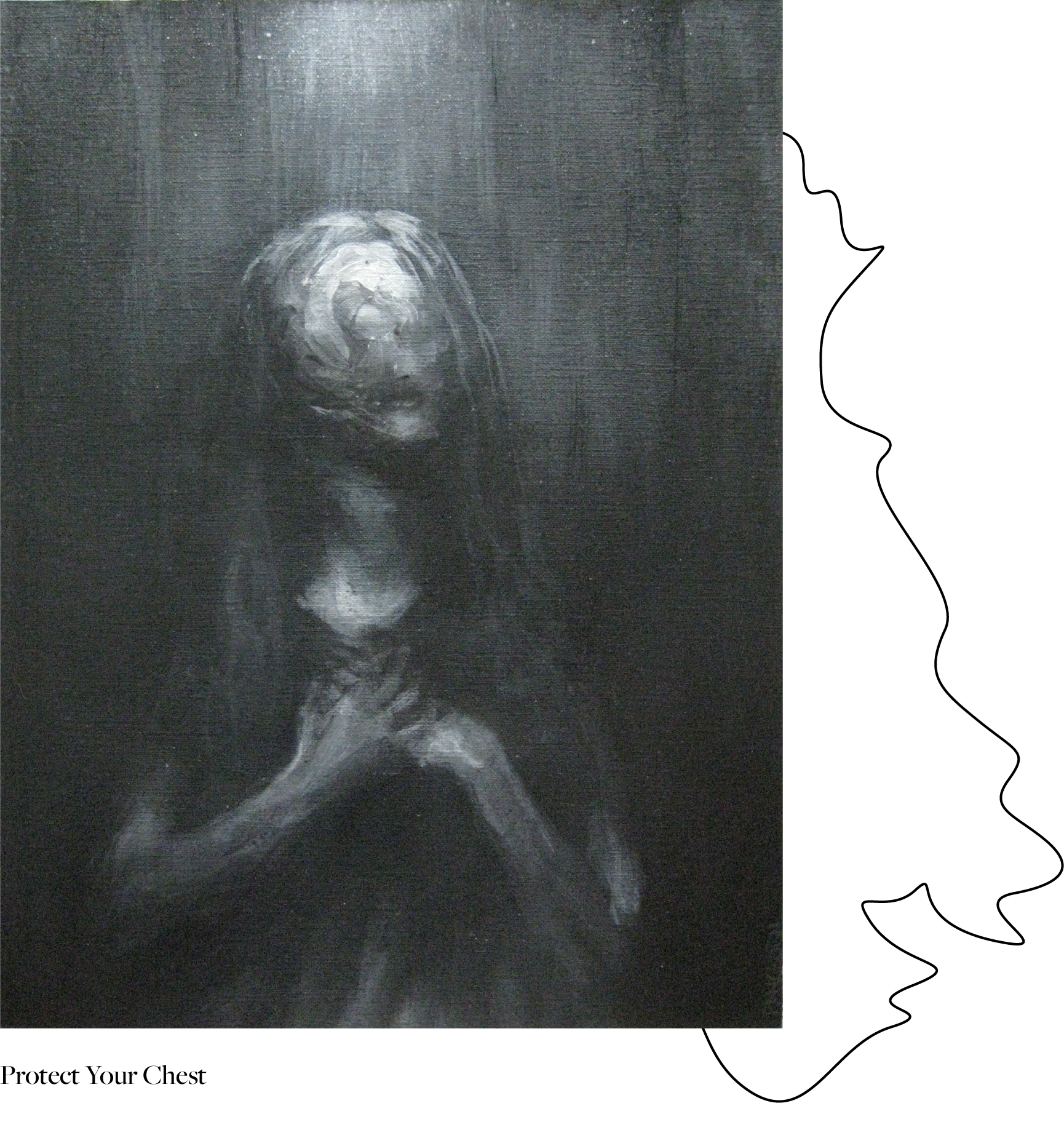
In his piece ``Protect Your Chest,” Pangborn expresses the erectable favor of nurturing the self. “Guard Your Heart. Be kind, be giving, but always protect your inner core. Don't let people use you and then toss you aside like a dirty towel. Don't let people take advantage of your kindness and mistake it for weakness." The use of light and contrast of his piece rectify the healing highlights to the painful scars that lay dormant within our physique. Just as chicken soup is to the soul, Pangborn spells out the cure to infliction.
In contrast, Pangborn strategically uses layers or light play as a form of education. It makes the viewer take a deeper dive into what he, as an artist, is saying, resulting in a greater appreciation of each piece.
Nevertheless, it is not an easy process for Pangborn. Oftentimes he reenacts a cycle of perception of what the finished product will evolve into. “Things look awful ... at first ...you can't see what the point of it is or where it's going. But experience has taught me that you need only stick with the process and be patient. The thing will reveal itself almost always and after that, it is merely nitpicking and polishing.” It is the sum of life’s lessons that settle within us as we mold our way through life. In this vulnerability, there is a warm connection to the viewer that is not found in many artists. It is the power to bear the soul and share it with another. We all have things that bump in the night, and Pangborn illustrates this effortlessly. It takes on a messy vulnerability, but there is great beauty within the mess.