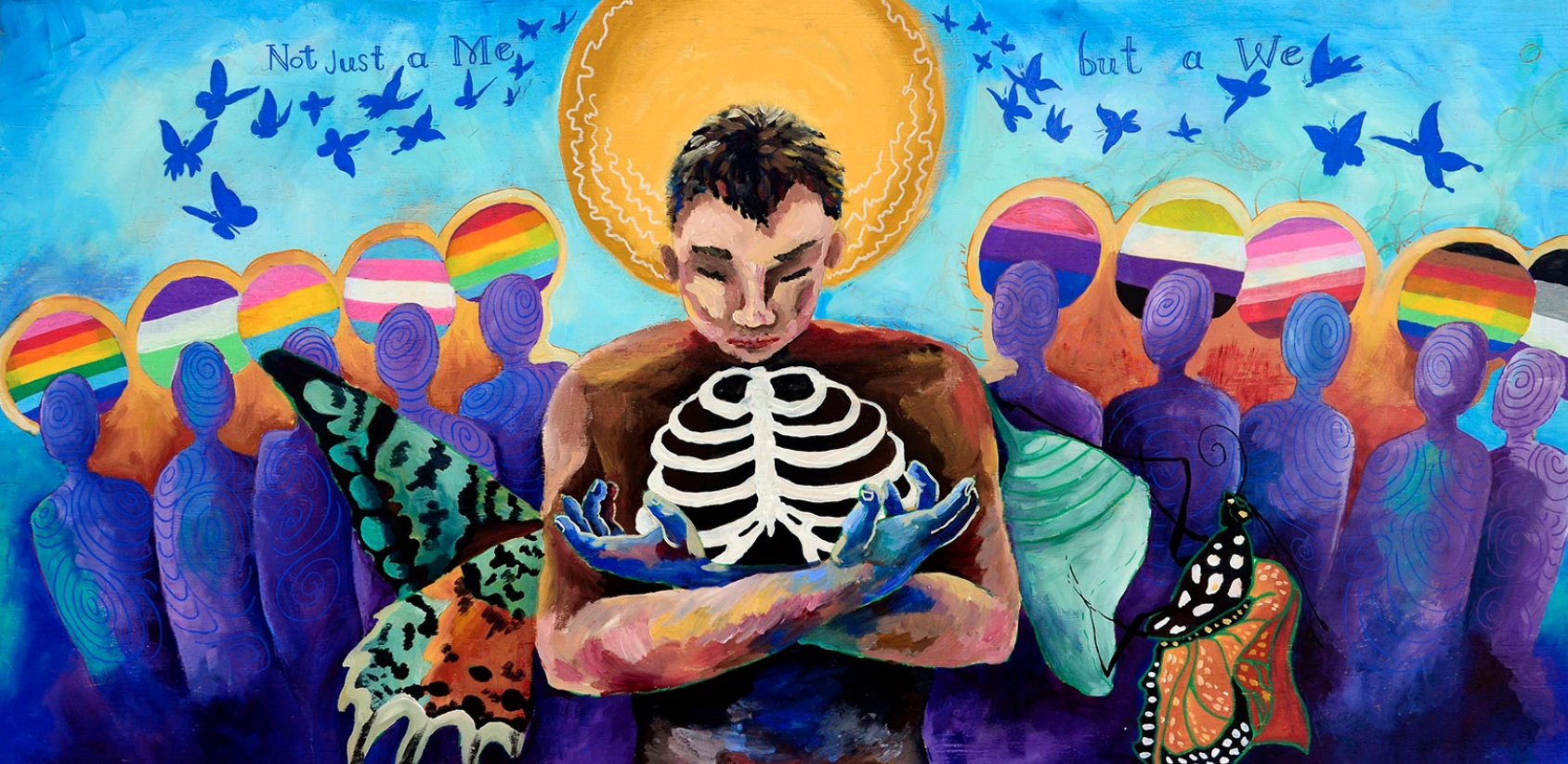
HOUSE OF ROSES N THE DARK PRESENTS…
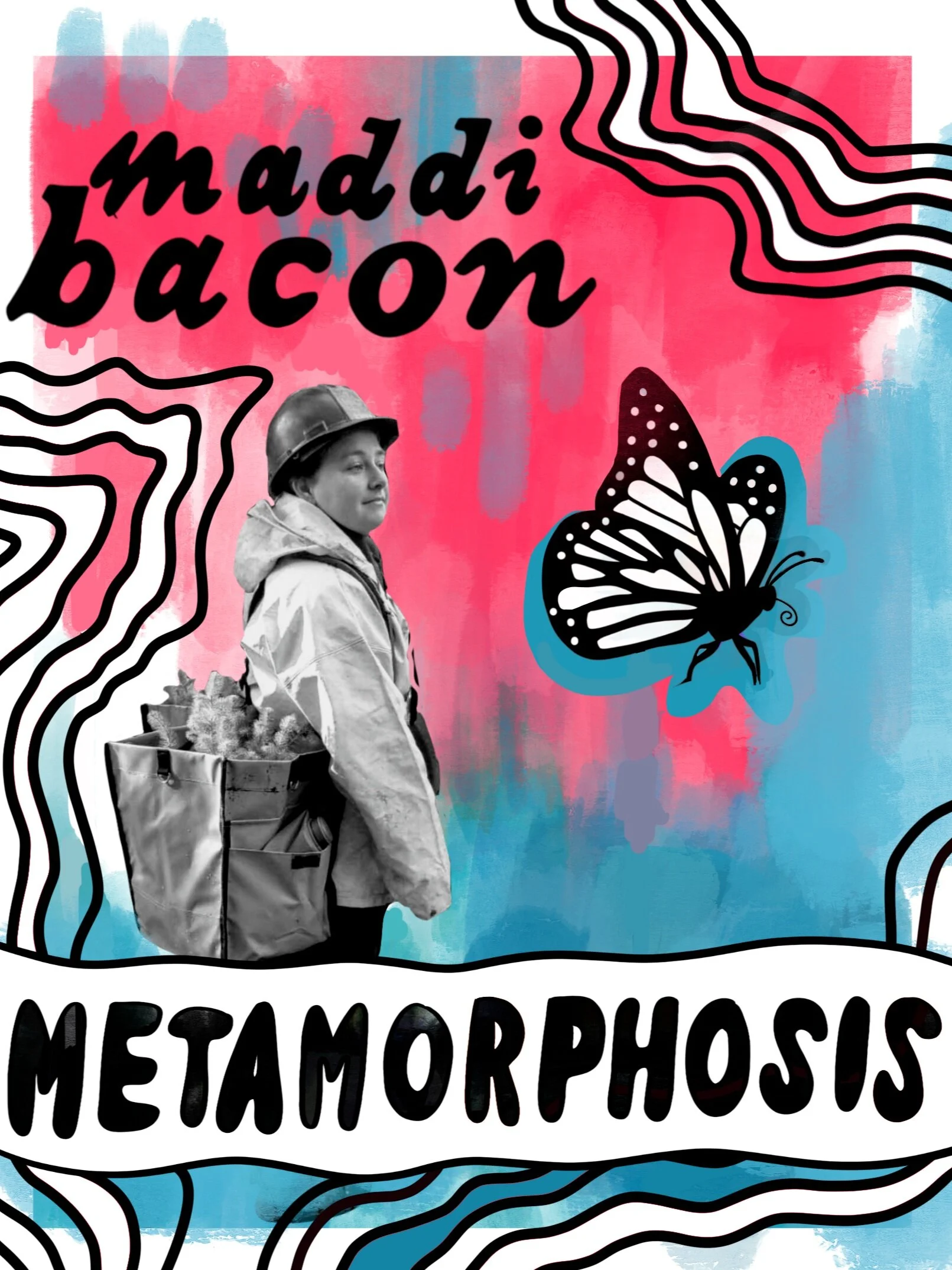
“METAMORPHOSIS,” A JOURNEY OF RECKONING AND RECLAMATION. BY EMBRACING ONESELF, AN ARTIST CAN TRANSFORM THE OUTER WORLD.
Article by Paige Perez and Design and Curation by Georgia Ezell
Great solace is given to people when they reflect and reconnect in nature. It is a wonder of creation accessible to draw inspiration from. Thanks to environmental workers who care for preservation of the planet’s natural resources, all living things would be able to benefit from it now and in the future. Similarly, art can serve as a component within a system of support to aid mental health. By protecting the splendors of nature that inspire art, one can work to understand their inner thoughts and potentially create a safe space to share with others that they themselves need.
“Healing is a layered process and art can be one of those layers,” says Maddi Bacon, a non-binary artist and conservation worker, in an interview over email. They work seasonal jobs like trail work, wildfire, and interpretation all over the country. These opportunities have exposed them to diverse experiences and people that inspire their art practice. In between jobs, Bacon reflects and creates artwork that tells personal stories about identity and shares stories of others. Using mediums such as ink and watercolor, acrylic paint, animation and video editing, Bacon produces paintings, comics and video projects that follow narratives and classic story arcs of fiction.
“There’s something that just makes sense to me about filling in my drawing with layers of watercolor,” says Bacon. They mainly enjoy making art about themself and their own life. They have found that they can best express through art better than they could with words. Even if Bacon’s thoughts and feelings around identity and their discomfort with being perceived by the world seem “messy and unsolidified”, a piece of art capturing that experience is the only way for them to explain effectively when asked by others.
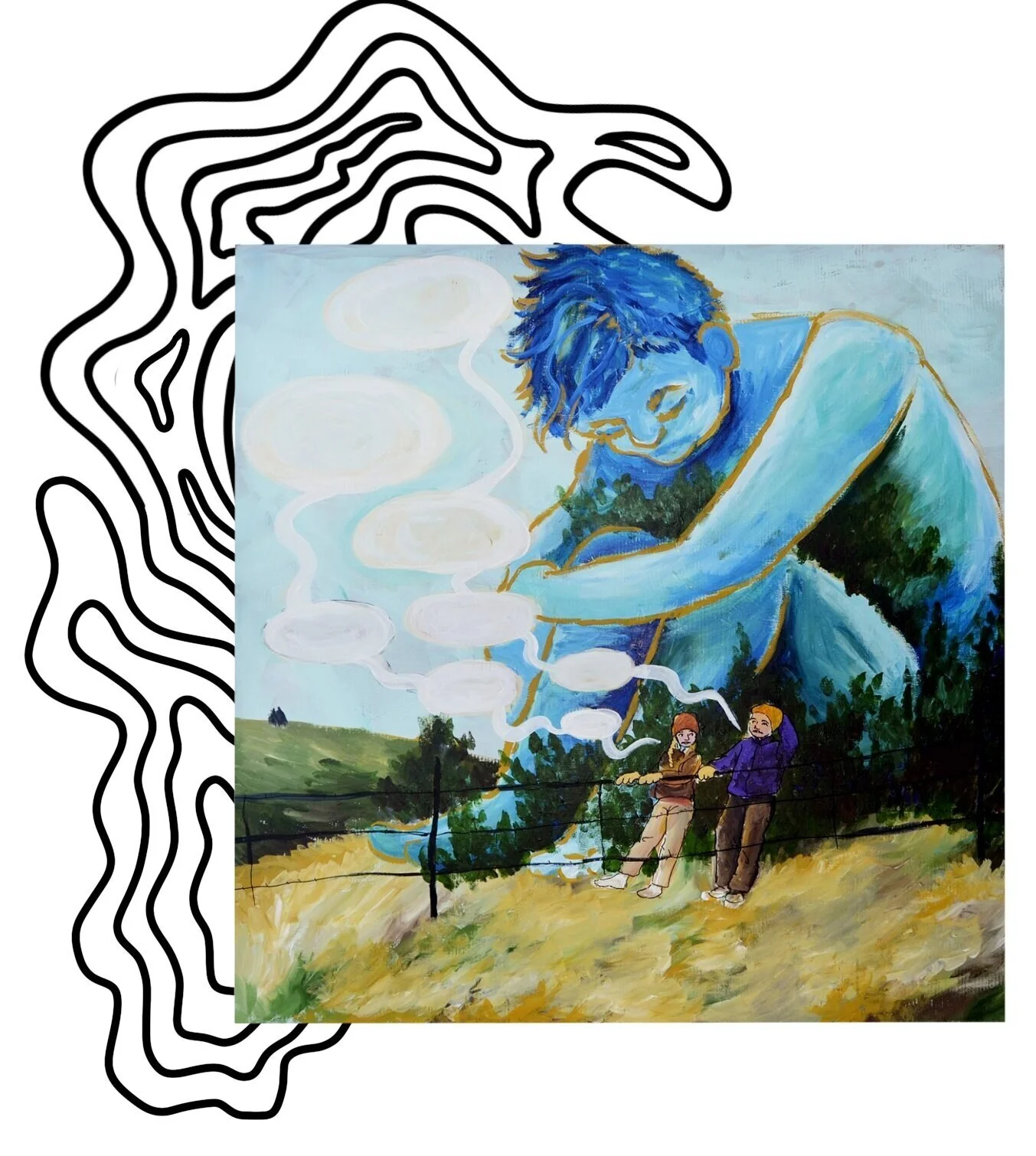
Bacon’s experiences with loneliness has recently motivated them to make space for others and promote community using zines, self-published works that are photocopied and circulated through physical prints. “I really just wanted to create something for everyone to connect over. A sort of ‘hey I totally relate to that!’ moment,” says Bacon.
While in art school, Bacon says that they were very unhappy and had a lot of anxiety, “I would swing back and forth from highly manic moods to severely depressed and anxious moods.” They juggled multiple art projects simultaneously and felt defeated when something minor would go wrong. Feelings of an “unshakable sense of doom and loneliness” clouded their awareness that they were experiencing frequent anxiety attacks. The pressure to create within a demanding institution wreaked havoc on Bacon and they suffered from burnout and uncontrollable moods, which they were not equipped to cope with. “Being an artist isn’t always good for mental health, “ says Bacon, “the lack of structure or schedule in my life because I was always putting in weird hours at the studio. The lack of sleep. The pressure to constantly be creating. The pressure of college in general and my need to graduate on time. The amount of emotional labor involved in trying to create pieces of art.”
In the animation, The Voices That Speak To You, Bacon uses accounts of real people including their personal story to explore anxiety turned into debilitating insomnia. The animation centers a queer character whose mental health and wellness is threatened by outside judgement and prejudice. Illustrations in watercolor-like imagery moves through the screen as Bacon narrates subjects of queer issues, attributing the piece to the lgbtq+ community.
After Bacon graduated from the University of Delaware with a Bachelor in Fine Arts in 2018, they felt that their art pieces were flat because Bacon was not able to experience anything outside of their grueling courses. In consequence, their pieces lacked meaning and a voice. In response, Bacon took a break from art. Without a job lined up nor a plan, Bacon looked into environmental programs that involved adventuring outside of their home state of Delaware.
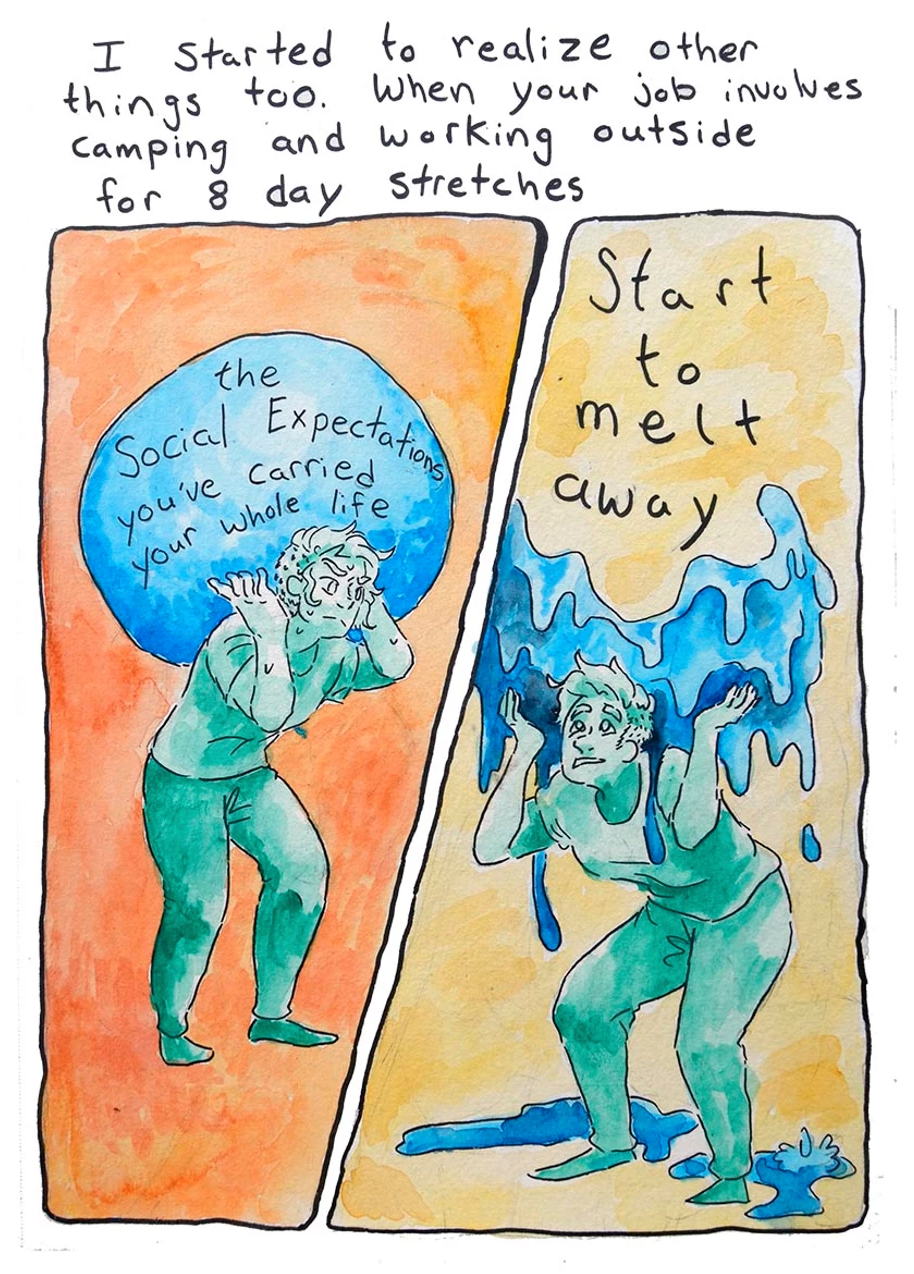
Bacon soon found a Conservation Corp in Flagstaff, Arizona, a program that offers opportunities for unqualified youth and adults to work. Bacon describes the experience as a crew of eight people get into a van and drive to a project where they camp and work for 8 days alongside public land agencies. Bacon has participated in various conservation projects that opened them up to rewarding experiences like building trails, rock work, and removing invasive species. As a result of being a part of a community of coworkers, Bacon notes that their mental health improved and their art was ultimately impacted for the better. Bacon says, “in a way, this experience saved my art practice. As my mental health improved I felt like I could finally create again. Even more than that, I felt like I finally had something to say.”
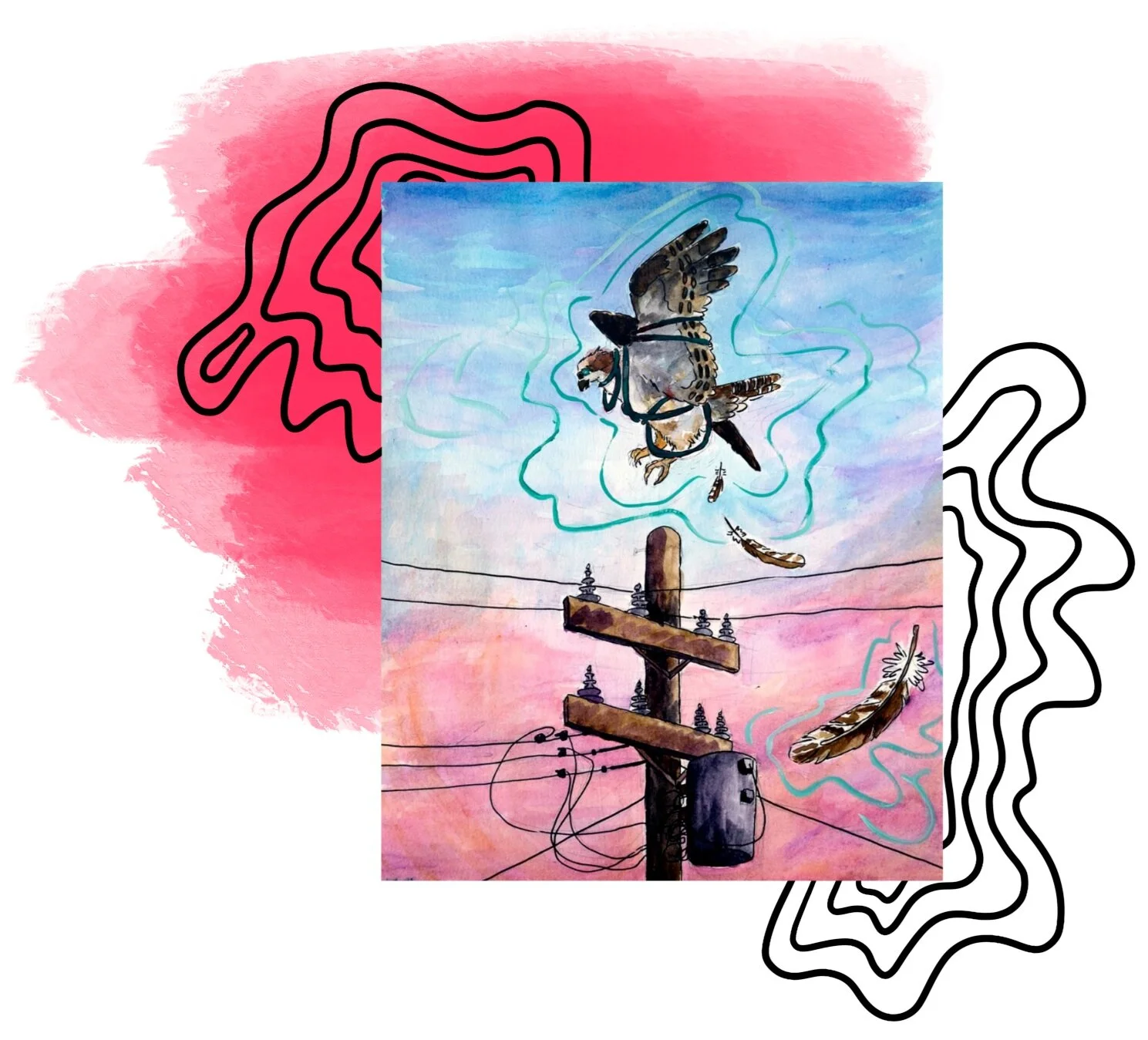
Bacon boasts about how empowering hiking in the backcountry and completing physically grueling work is for them, especially when they consider that the land in North America has been shaped and cared for by many people and will continue to be. Apparently, workers are thrown into intense jobs where they work and live closely with strangers. Bacon has enjoyed meeting people this way and says that close friendships are quickly developed.
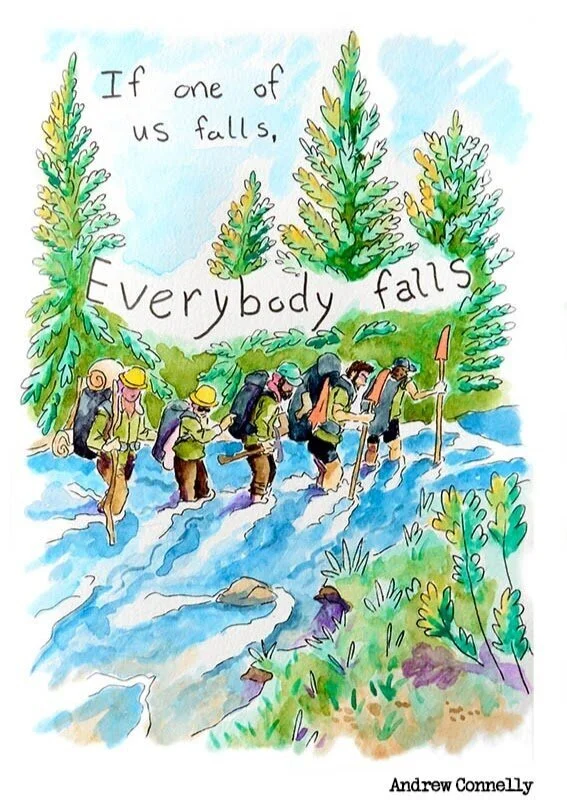
The workers bond over the notion that the outside world does not understand their line of work. Bacon was inspired to facilitate comradery around this topic with other workers and created Notes From The Field, a zine made from submitted photos and stories about the world of conservation. “I was surprised by how many submissions I got from people I didn’t even know. I had a lot of fun going through the submitted pieces..., “ says Bacon, “Everyone’s individual character really showed through and that made it even more fun for me.”
Bacon’s self-esteem has improved and they are creating art again as a tool to reflect and think positively. They have observed that mental health is an important responsibility and healing is an ongoing process and journey. Though Bacon believes that they are in a better place now, they are aware of the discipline necessary to maintain care for their mental wellness in order to continue to thrive and grow intentionally in this area.
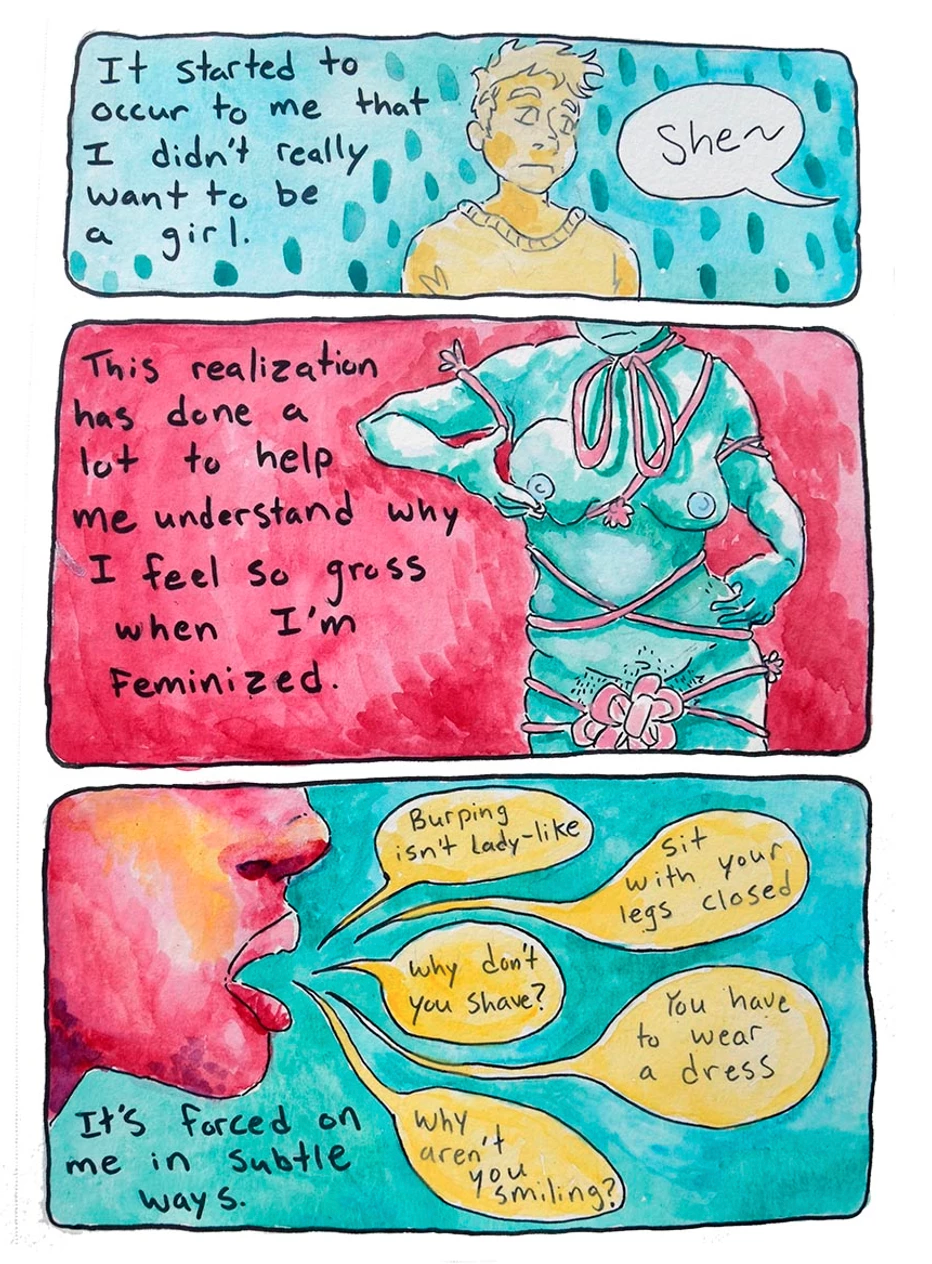
Working in nature additionally brought clarity and resolution to Bacon’s struggles with identity. “Along with meeting other trans people and getting to have experiences living and working in nature, I started to realize I definitely wasn’t a cis woman. I’ve used my art to explore that thought a lot,” says Bacon. Whether via “a scribbled poem in a notebook or a messy self portrait”, Bacon uses art to explore their thoughts and feelings. Bacon’s paintings include various depictions of gender issues and express a sense of community.
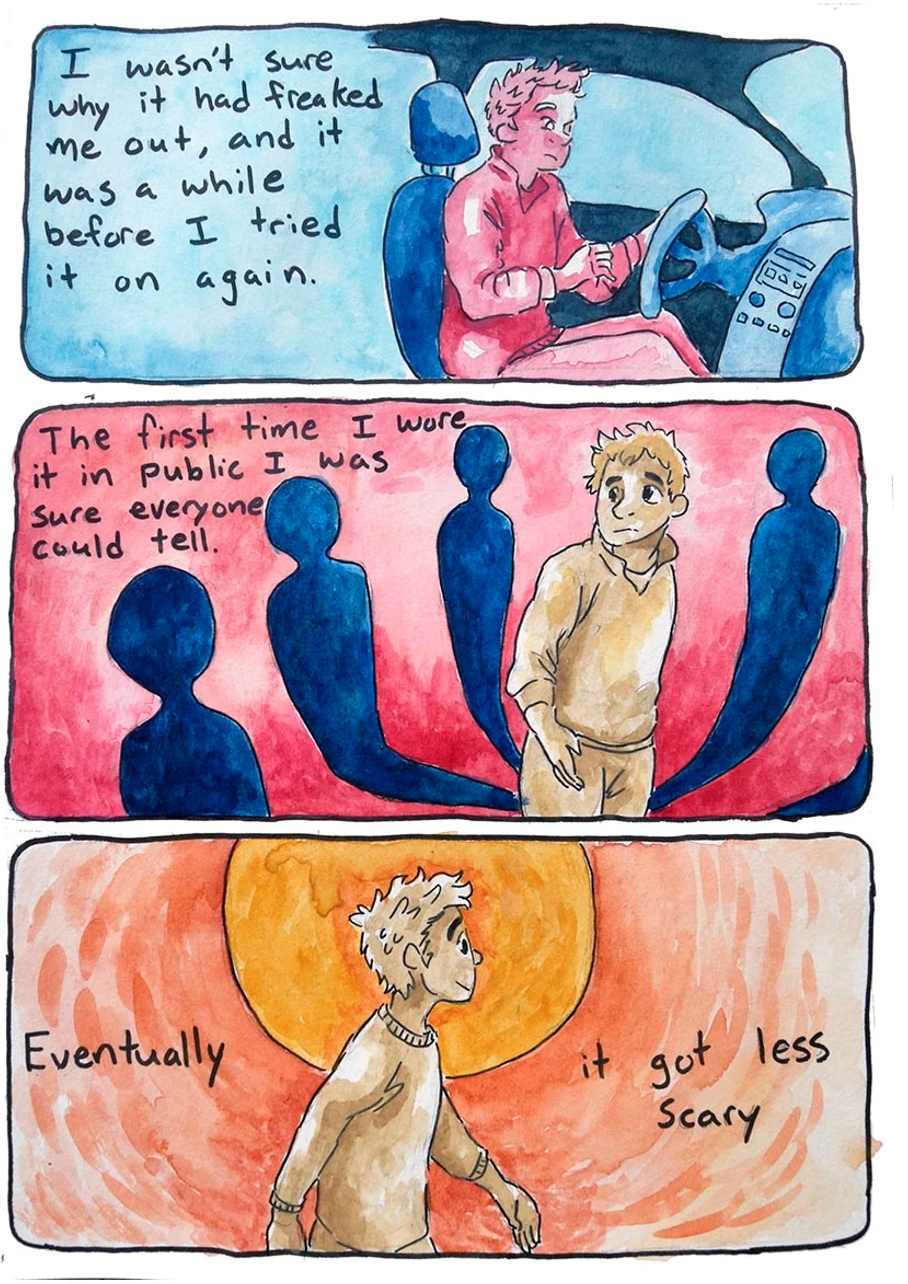
A “more refined exploration” of Bacon’s feelings toward queer identity is expressed in their comic, Conservation and Gender. Bacon has been reading and writing comics for years and decided to create a short comic about their non-binary experience after reading Maia Kobabe’s graphic memoir, “Gender Queer.” Bacon says that the comic explores how conservation played a key role in the reclamation of their queerness. Through the comic, Bacon used words and drawings to express their feelings. “It’s scary to make art about such personal parts of yourself and then share them with the world, but every person who comes out makes the world a better and safer place for other queer people,” says Bacon.
The conservation industry is dominated by white men and, according to Bacon, the atmosphere of the workplace is not always the most progressive. Bacon has felt uncomfortable disclosing their gender to a lot of coworkers. But others have expressed their admiration to Bacon for “doing this line of work while also being artsy and queer.” Because Bacon lives their life authentically and courageously, the opportunity for others in the queer community to follow and live their fullest expression has become more of an attainable reality. “Any small bit I can do to take down the toxic masculinity in the world is a win to me,” says Bacon.
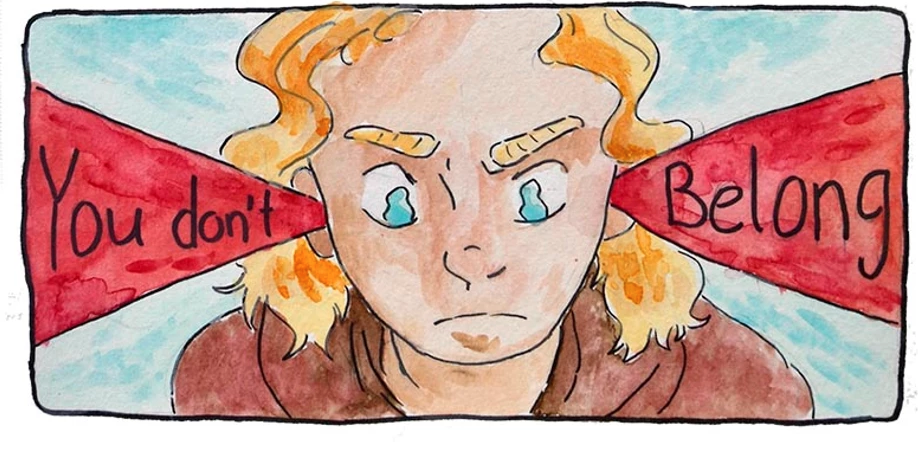
Maddi Bacon’s paintings, comics and video projects uphold the values of House of Roses N The Dark (HORNTD) uniquely in how the growth of Bacon’s self-perception has extended beyond the individual to transform into a community building initiative. By embodying the authentic self, Bacon uses art to funnel their thoughts and feelings almost experimentally into activism. This commitment has made way for deep understanding and a motivation to create art pieces that encourage dialogue and community. In response to an inquiry about the role artists play in society, Bacon says, “For me, I like to think that art and artists don’t necessarily need to have a purpose. Just by existing they make the world a more colorful and enjoyable place.