HOUSE OF ROSES N THE DARK PRESENTS…
TRAUMA, ADDICTION, AND THE EVOLUTION OF IDENTITY THROUGH TAPESTRY
Article by Paige Perez and Design by Georgia Ezell
Similar to the techniques applied for yarn to entwine into a tapestry, art therapy can offer a gateway to come to understand one’s mental health and shape identity. Healing from traumatic experiences for an individual is a daily practice, and for an artist, it can translate into their craft becoming an expression of life as they experience it.
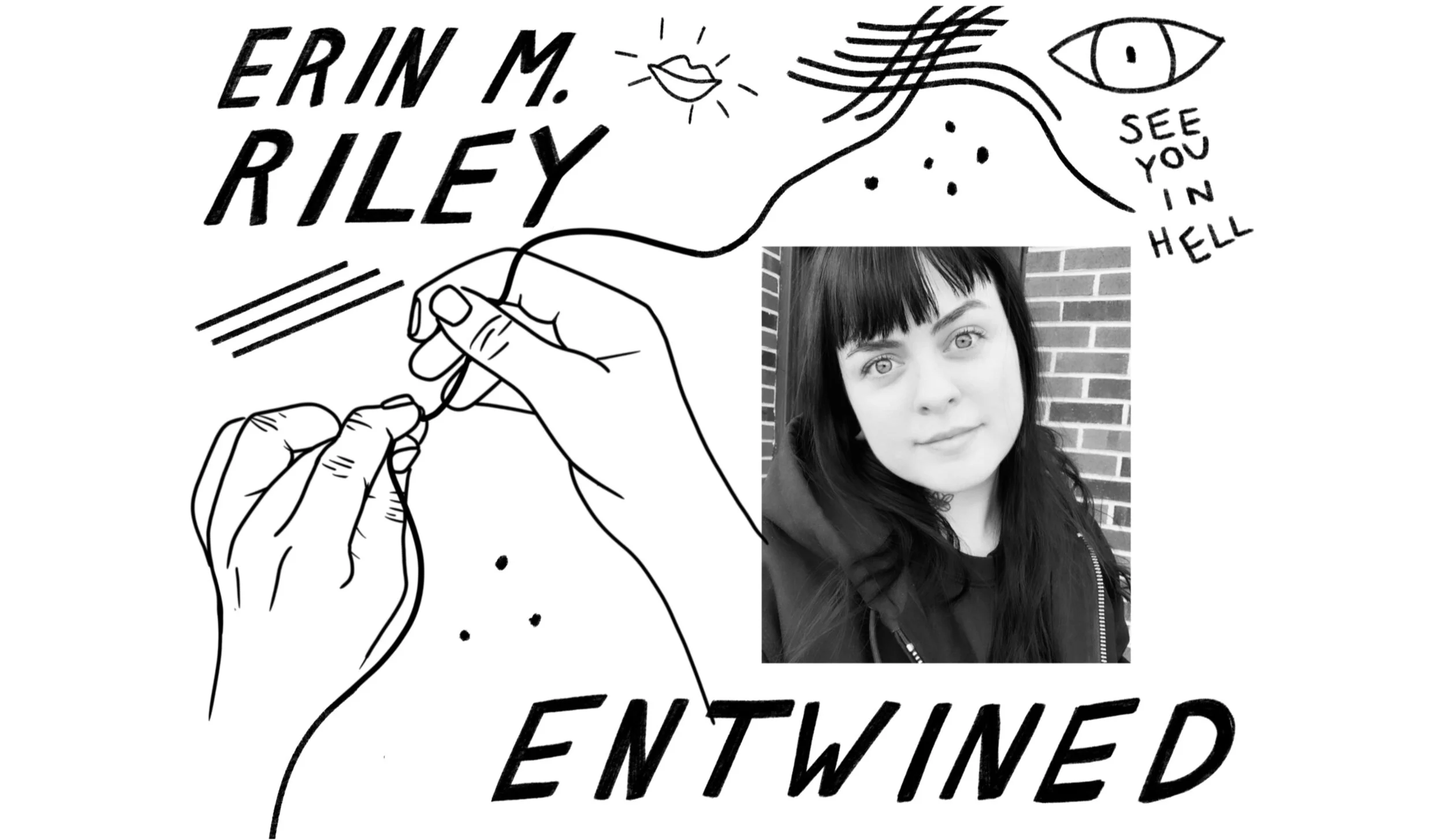
Erin M. Riley (she/they), a weaver and visual artist based in Brooklyn, uses traditional tapestry techniques in hand dyed wool as a therapeutic tool to process trauma from a family touched by addiction. Their work is inspired by trailblazing female weavers who have challenged stereotypical notions of weaving as domestic work. Riley makes the art form their own by examining themes including coming of age on the internet, drug addiction, domestic violence, family structures, and sexuality. Art encourages vulnerability and, for Riley, has the potential to expand the possibilities of what mental health could look like for the public. Their interest in dismantling the things that impact their family and community has always been a priority pursued through their tapestry artwork. They hope to encourage conversation regarding these areas and how the art community can give artists more room to work through mental health realities despite norms of the industry.
Riley is a full-time artist who spends most of their days weaving and preparing to weave. In a written interview over email, Riley said that they usually, “work all day and then go to bed and do it all again the next day.”
While receiving their BFA from Massachusetts College of Art and Design, Riley was exposed to weaving for the first time. She connected with the process immediately because, “it was full of math, has freedom and restraint and is rewarding and challenging,” says Riley.
In a presentation Riley gave with the Pennsylvania Academy of the Fine Arts (PAFA) in 2020, she highlighted a few female weavers in history like Helena Hernmarck and Hannah Ryggen who paved the way. The weavers helped to shape Riley’s rule bending approach to textiles as rough work that is making a statement rather than a craft that is domestic or dainty.
Riley’s home life and community are the places she pulls from for artistic inspiration and to creatively address social issues like mental health and drug addiction. She was raised in Cape Cod, Massachusetts with sisters who battle addiction. Riley examined girlhood and identity early on in their tapestry artwork through simple cartoons they created from childhood images. Through art, they worked to process difficult and overwhelming real life events as well as notions of familial relationships like sisterhood and who their sisters were as people. While at graduate school, narratives began to unfold and explore relevant topics. “I have always been interested in dismantling the things that have held great weight in my family and community. I become obsessed with issues that overwhelm me, from drug addiction, to domestic violence, family structures and sexuality,” says Riley.
Riley’s first solo exhibition was called “Daddy Issues”, which was based on images and sound collected from social media and found on Google. Photographs of objects further aided in an exploration of consent and internet culture, specifically when it came to younger generations of people sharing explicit selfies or drinking activities online. Riley considered the possibility that images alike can show up in other places and be used in ways not originally intended by the subject. She brings awareness to that reality while also pointing to the sexual explorations that transpire in those spaces.
As a developing artist in the digital age, Riley shares their tapestry artwork online and appreciates reviews and feedback from the public. “Growing up online and creating social circles over decades, it has been amazing to have the continued feedback and awareness of the progress of my work. Making work and knowing that the internet will always offer me a critical eye has been an amazing way to understand my work and stay inspired by all of the things going on in the world,” says Riley.
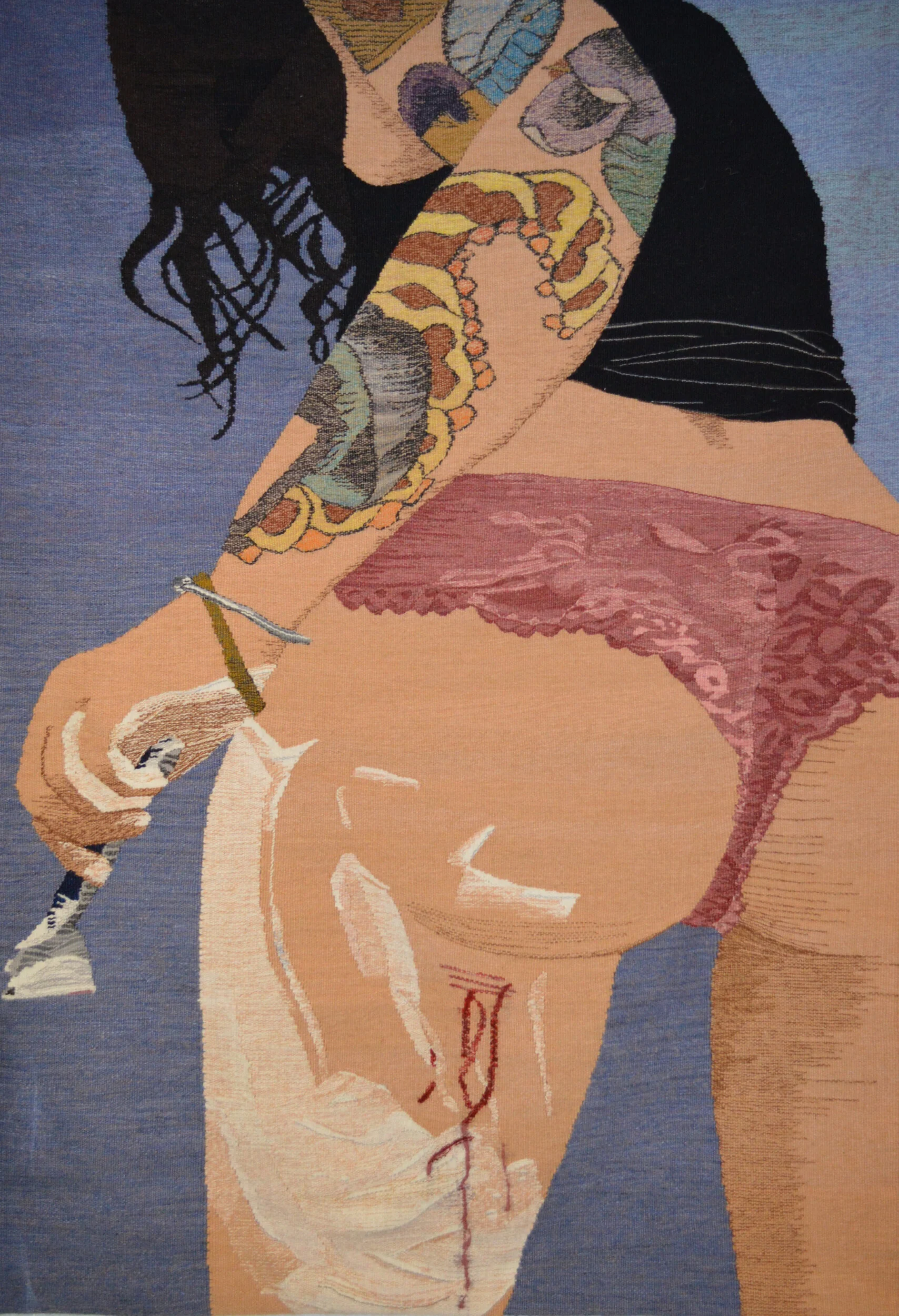
Soon after, Riley began to weave their selfies into tapestries which jump started a body of self-portraiture that helped Riley to explore identity and process events happening around and to them. At first, she included self images without their identifiable tattoos and eventually included that physical component into their artwork. By centering their body in this way, art became self-reflective and made it more okay to speak on difficult things, like sexual assault, and reclaim their body and spaces. Images of physical marks from non-consensual hookups and domestic violence are entwined in tapestry. Their work alternates from being self-reflective to mirroring what was happening in their home life like drug arrests and overdoses frequently. To Riley, these issues are related to each other and not exclusive.
Tapestry artwork also has become an outlet for Riley to express mental health. “My work has been the longest relationship I have ever had,” says Riley, “it is there when I need to deal with the hard things in life and it has allowed me a place to funnel my anxiety into productivity.”
Selected images are traced into a drawing (cartoon) and then pinned to the back of a floor loom, according to an interview conducted by Portia Makoma in 2015. Riley hand dyes the yarn themself and prepares the appropriate colors necessary to weave. They typically weave tapestries 8ft wide by 8ft long to create images to scale. Large tapestry works are shown in solo and group exhibitions. Riley’s most recent exhibitions in 2020 included a solo show called “A Reminder of Being There” displayed at the Jonathan Hopson Gallery in Houston, TX and “Blast Over”, a group exhibition in Ruttkowski;68, Paris, France.
Riley’s artwork is their life in terms of commitment and work ethic but also in the sense that it embodies explorations of topics and subject matter that they work to courageously talk more about. With great sensitivity and consideration, Riley brings to light issues that are often overlooked and kept in the dark by the general public. “I am continually creating work from the excitement, explorations and ephemera of relationships. This appears as selfies, used condoms, familial photography,” says Riley.
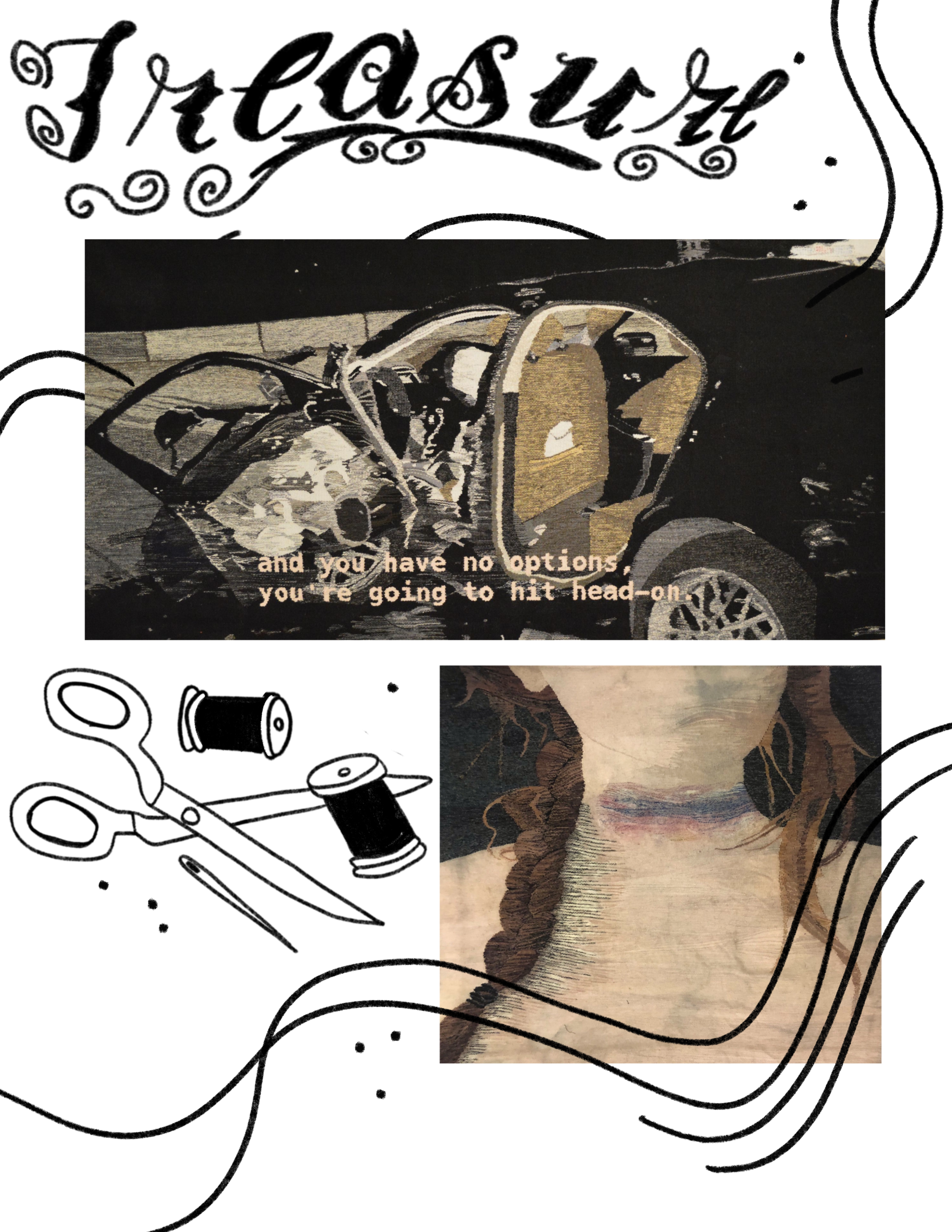
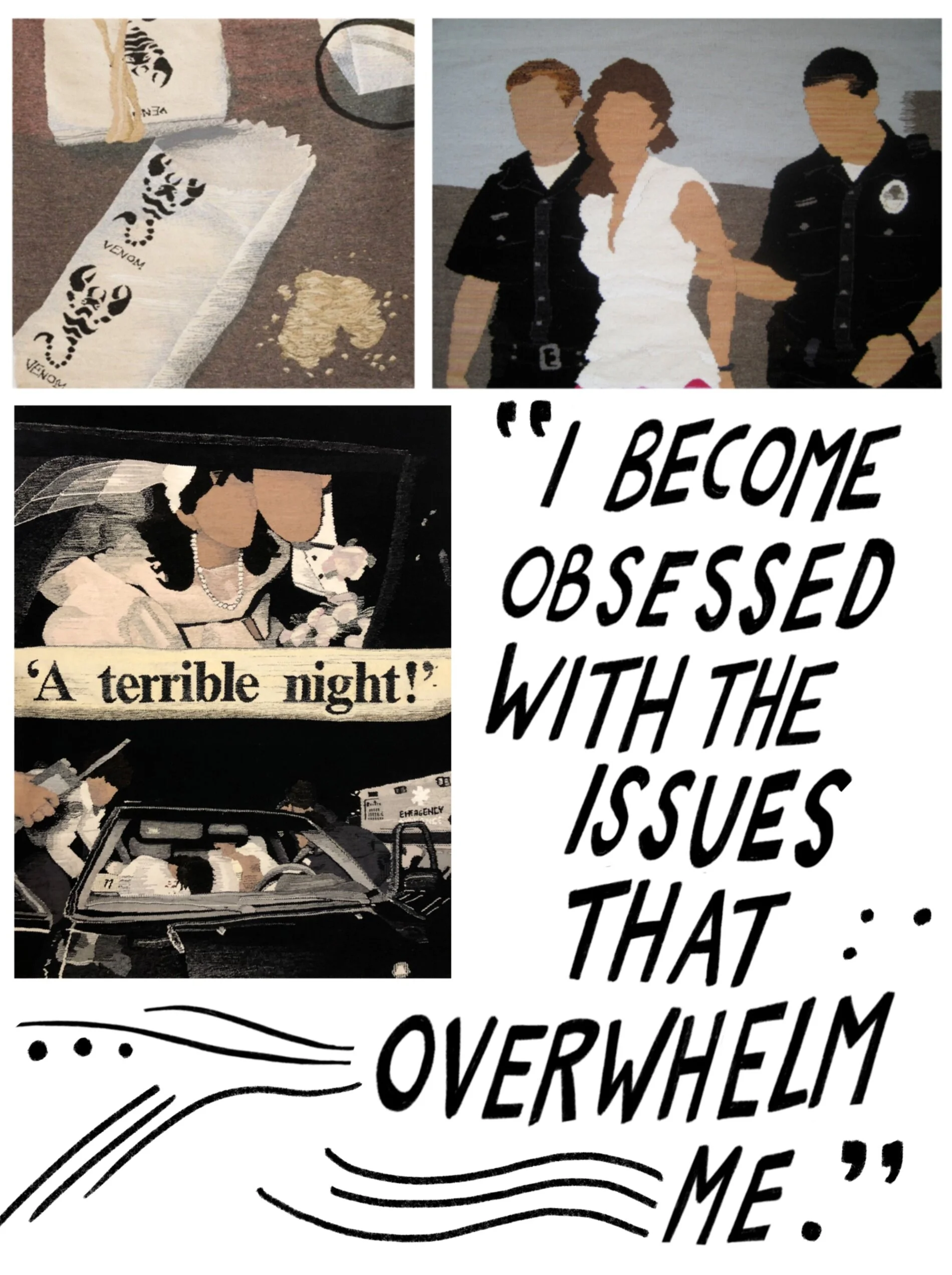
The tapestries highlight self-harm, porn, piles of materials affiliated with sex, gender neutral and queer spaces, family structures, and critical moments that could alter a person’s life like road accidents, police brutality and arrests.

To some viewers, Riley’s work may be perceived as controversial, pornographic, erotic, and striking but that is not its intent. Rather, it is to unveil the realities of these things in our society and lift the shame off of them so that more accepting and understanding conversations can take place. Sexuality, in particular, is explored uniquely as something not solely for someone else’s pleasure. Riley’s work encourages women to claim their own bodies and desires for themselves.
Growing up in their family structure, Riley themself experienced a repression of sexuality, described by them as “a perpetual failure at girlhood”, coupled with the denial of mental health needs. “I grew up in a household that did not talk about mental illness, we weren’t encouraged to seek help or speak about our issues. In adulthood, I have been trying to understand my personal mental health as well as how my grandmother’s and mother’s undiagnosed or misdiagnosed mental health affected the family structure,” says Riley.
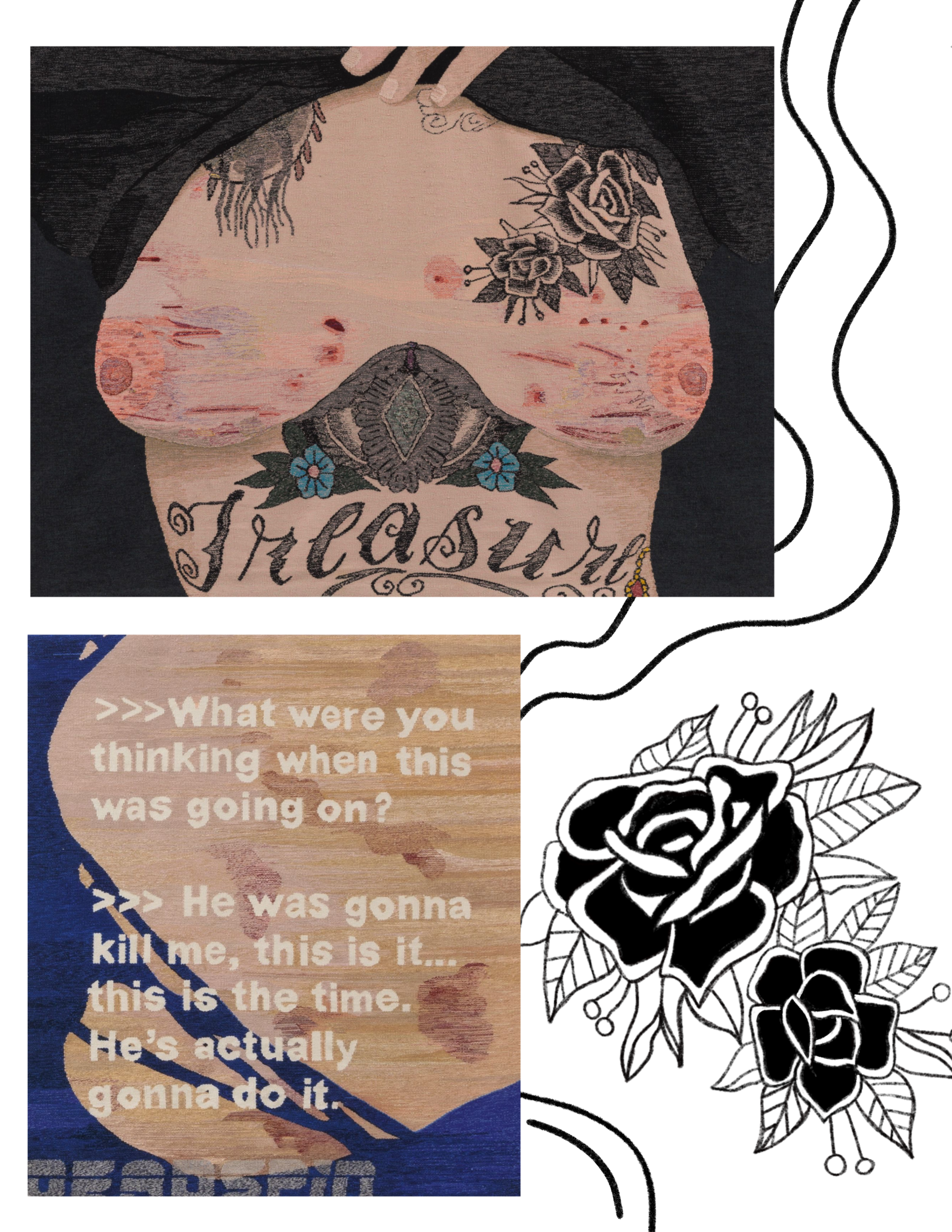
By using art to explore how generational trauma and internalized feelings of shame affected their mental health, Riley works to courageously humanize pain. One tapestry created in 2020 entitled “Anxiety”, a piece made from wool and cotton that measures 100” x 72”, is an example of Riley sharing a personal experience in their art to process their mental health. It depicts a tattooed chest revealed under a black t-shirt that was self-harmed. Wounds around the breast area are at the center of the piece and is a vulnerable depiction of mental health manifesting itself on the physical body. “My piece ‘Anxiety’ is the most explicit depiction of my trichotillomania/dermatillomania. It has been an ongoing process to get to a point where I can talk about this and feel like it doesn’t control my life. 2020 was a terrible year for everyone and my mental health hadn’t been that bad since college 10 years prior and my self harming was at an all time high. I documented the sessions as a way to hold myself accountable, and that tapestry is the result of those photographs,” says Riley.
The documentation that takes place to process things that can be overwhelming in life is a practice in Riley’s artwork that reveals their mental health journey. She hopes their art impacts others positively by showcasing vulnerability, which Riley believes encourages, “the space for people to open up, find their truths, and connect to their experiences.”
Erin M. Riley’s tapestry work strongly exemplifies the missions of House of Roses N The Dark (HORNTD) as it highlights diverse issue areas including trauma, family addiction, and identity. Through the use of art as therapy, people can come to better understand and process their mental health. The art industry can work to better support mental health awareness and the artists who are members of the mental health community by following Riley’s example of vulnerability and education of issue areas not commonly talked about. Riley says, “I think as the art industry becomes more and more professionalized there leaves less room for artists to be given the grace or space of instability. It seemed like artists used to be quirky and eccentric and allowed to be as wild and real as they were, I think we can give artists more room to experience depression, or work through social anxiety, or addiction issues. We can be flawed and still show up with our creativity without being a risky investment. I actually don’t see much of the ‘ugly’ side of mental health and it could be constructive to see more of the harsher realities.”
CURATOR STATEMENT
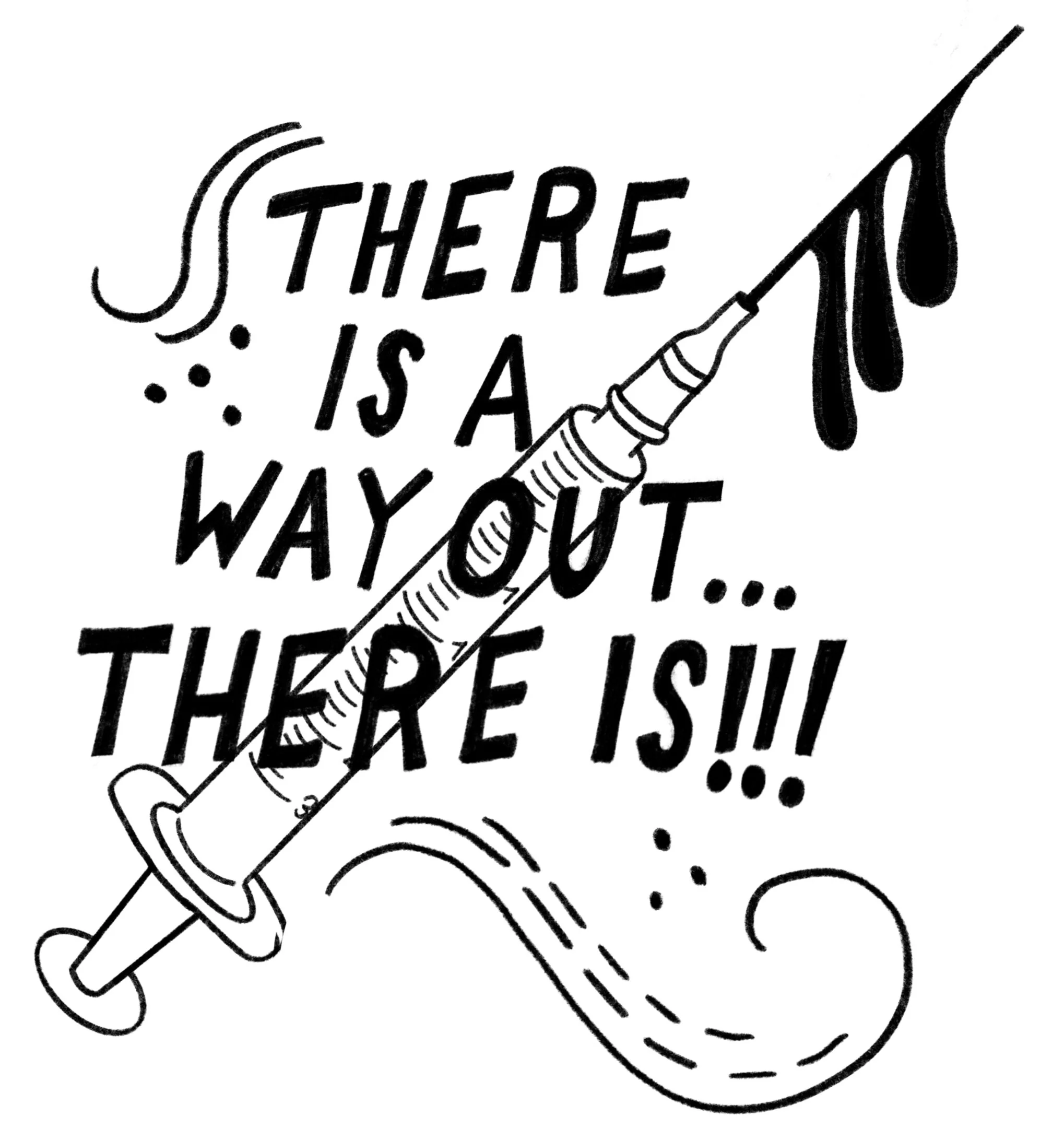
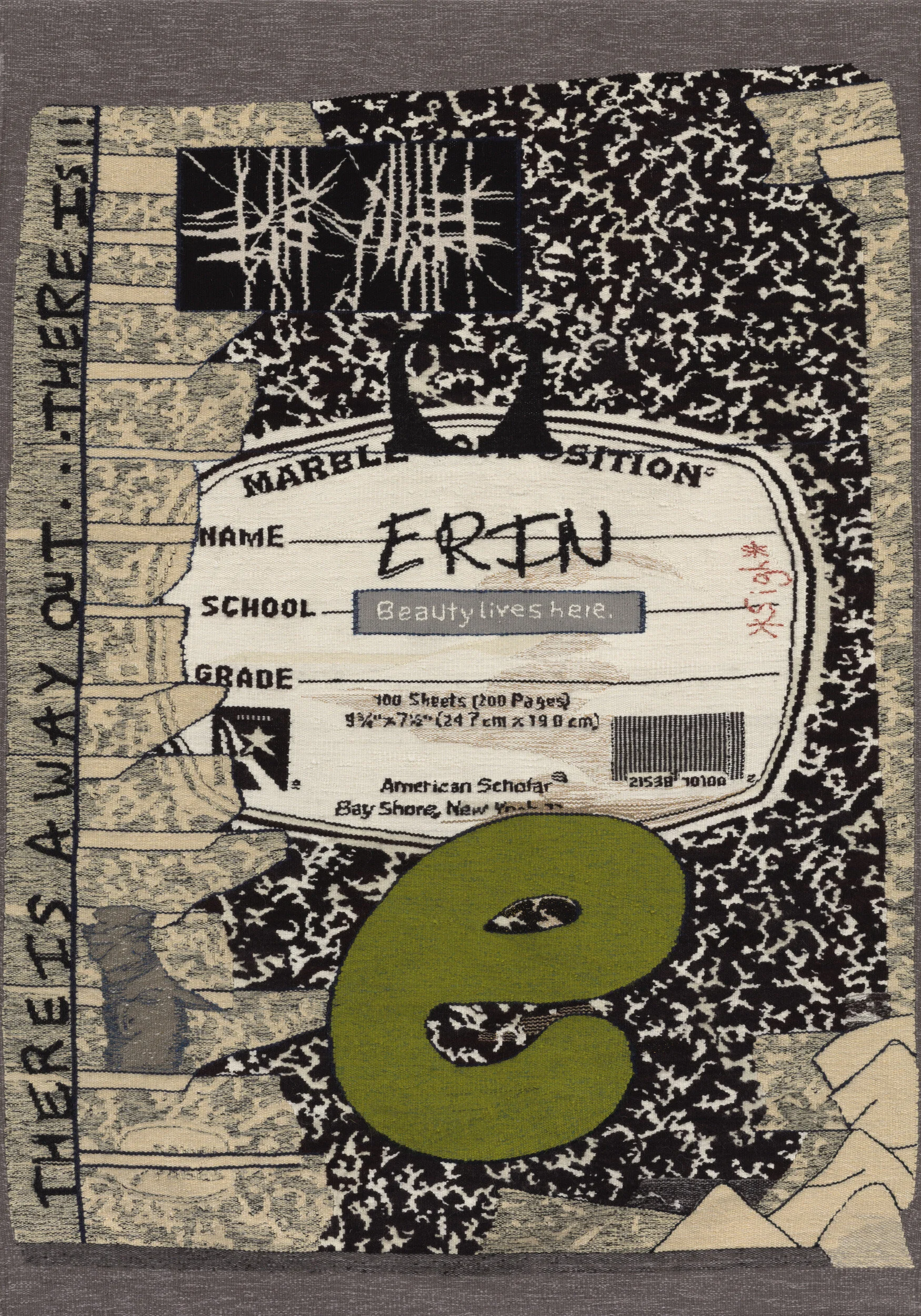
These pieces were all carefully selected to showcase the breadth of Riley’s talent, and to highlight the influence of trauma, addiction, and mental illness on their art and identity. Several pieces, including “Bruises”, “4am Hookup Prep”, “Your Heroes Are Our Villains”, and “Anxiety” explore the themes of abuse and self-harm through depictions of lesions, scabs, and bruises on the body. This boldness to explore such personal, weighty topics is reflected in the rest of their pieces as well. Several of the other featured tapestries, for example, delve into themes such as drug abuse and domestic violence. In particular, Riley’s chilling piece “Your Heroes are Our Villains” serves as a powerful reminder of the terrifying dynamics surrounding abusive relationships. Riley weaves this motif into their pieces “Head On” and “A Night”, as well, which both depict scenes of intense trauma. “Venom”, “Three Strikes”, and “Jesus Calling”, however, delve into the all-consuming nature of drug abuse, and reflect a life touched by addiction. The final piece, “Beauty Lives Here”, serves as a tangible, much needed reminder from Riley to all of us: “there is a way out...there is!!!”. And sometimes, art is the guiding light.
AUTHOR
Paige Perez
CURATION AND GRAPHIC ILLUSTRATIONS
Georgia Ezell