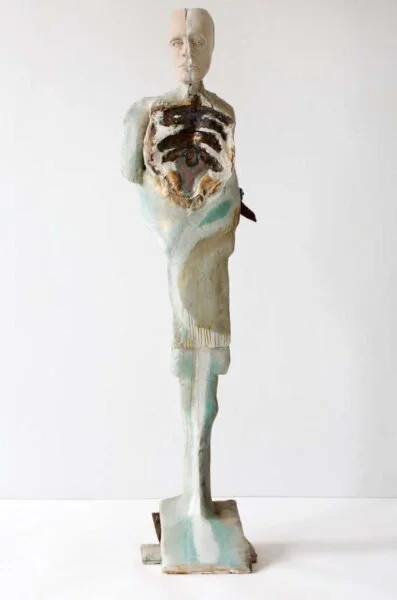
Alarm Bell Cacophonies XVI
Ceramic, wood, plaster,
71 x 20 x 15 2019
Depletion
Derek Weisberg
Brooklyn sculptor Derek Weisberg examines the distinction of vulnerability, the creation process, and fulfillment, as a pathway to transcend depletion. Often using grandiose approaches, Weisberg's pieces are a combination of figuration and abstraction, with a sense of nostalgia of the Roman era. In his upcoming exhibition Still Lives, Weisberg demonstrates how life can bloom, but inevitability dwindles out as a flickering flame. The upcoming exhibition is filled with portraiture vessels that symbolically represent the aspect of existence and the battle of limited time.
Art has been Weisberg’s given purpose and a trusted foundation to navigate his life. As a folk tale of the soul, Weisberg dodges the riptide of reduction through the act of creation. “my goal is to be tapped into something larger, a sort of presence as in being totally in the moment.” As often as one might think to transmute depletion into gratification, the artist uses this concept as a way of making a bigger picture. Weisberg's precise connection of the dots intentionally pursues the sweeping joys and the downward turns of life. “Sometimes I think of life as a highway let’s say, there are multiple lanes, with multiple things happening in each lane. You are traveling along the highway, in all lanes, all at once, but not all lanes get driven on at the same time.” Because of the potholes life sometimes gives, Weisberg uses art as a tool to shift gears when faced with depletion. It has been an immense source of purpose for Weisberg.
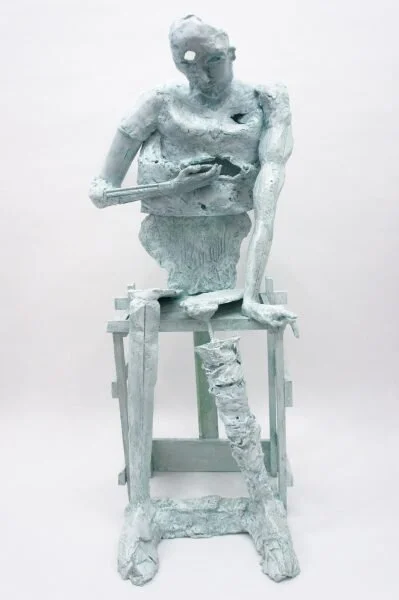
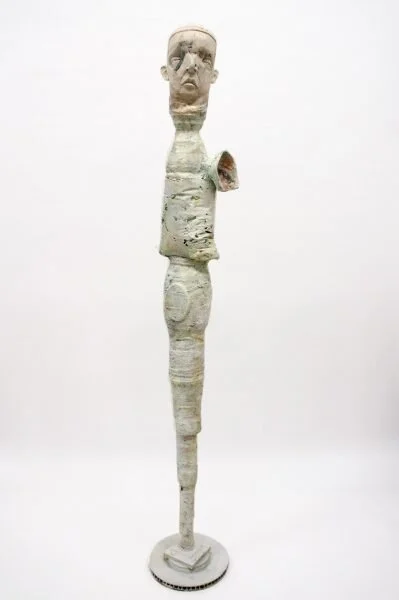
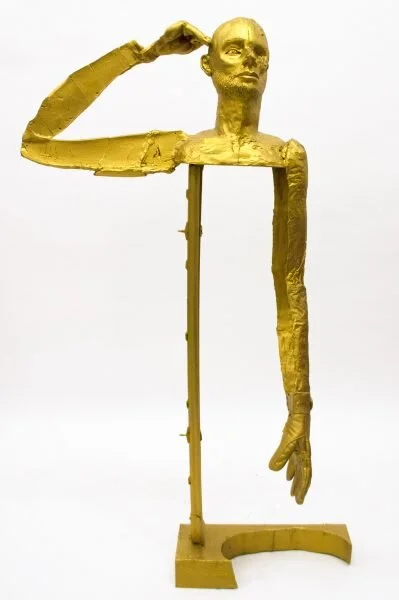
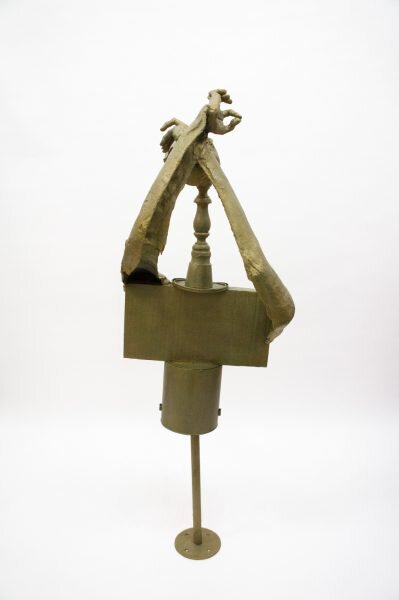
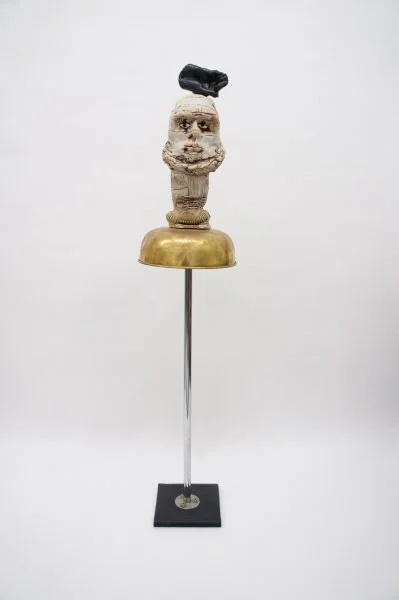
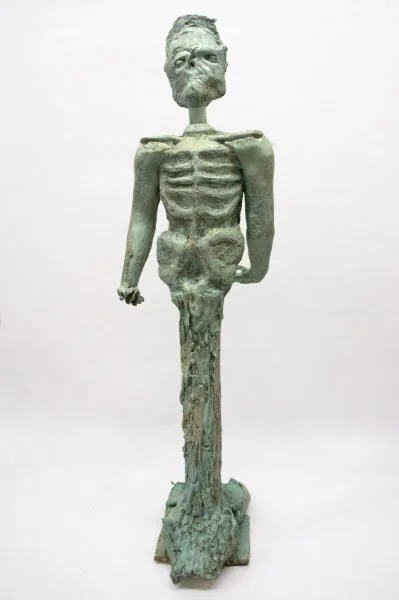
Clay for Weisberg is in fact a tool used to heal. The process of hand-building is a source for the artist to tap into his “deeper self and mental space.” Being subjected to depletion is a part of life, but Weisberg uses art to interchangeably manipulate the abyss into creations. “The act of making is the activity that brings me ultimate fulfillment and joy so I am my best, healthiest self when working.” Art allows him to unpack the mundane of everyday life. The process lets him exist and work “ in a much more pure and vulnerable state.”
Many works in Weisberg’s 2018 series Alarm Bell Cacophonies exemplify the disruption of human nature when “man” is not at peace and to parallel the dissonance of human nature and the inherent purpose of the soul if not put into place. Many of his pieces are strategically stacked on top of each other using salvaged materials and muted colors. In contrast, Weisberg’s series Ontological Splendor incorporates colorful pigments to slender structures. The pops of color give stirring energy that fills the linear pieces. The use of clay effortlessly gives a feeling of soothing strength that is also familiarly fragile. Each piece tells a story of purpose, the soul, and feelings of home.
Although Weisberg is venturing out into different mediums, his core has always been clay. Weisberg’s relationship to ceramics is the heartbeat of his creation. “I have a very strong connection to clay… I would say it's a symbiotic relationship at this point. I almost have to touch the material to stay sane.” The correspondence between himself and clay is not only a part of Weisberg’s self-expression, it is a pivotal component to achieve balance. In the review of Weisberg’s 30-year body of work, clay is a part of his senses, movement, and structure. Each creation has added to Weisberg’s expertise in putting hand to clay. “My handling of the material is basically second nature… the clay becomes a natural extension of my hands, arms, body, mind.” Mastering his approach has given him the opportunity to explore new ways to interact with the material. Leaving it to chance by letting the clay react to the artist on its own terms. Weisberg notes “because of this familiarity, I am constantly trying to introduce elements of chance and surprise in the work.”
Photo by Brad Ogbonna
Weisberg agrees to the cathartic process while working with clay, which allows him to give and to receive through his pieces. “The act of creation is a special act and sometimes we create from deep places inside ourselves that we may not even be fully conscious of, but if we become aware of that it can be insightful and helpful.” With that notion in mind, Weisberg’s work often goes against straightforward interpretations but rather explores the complexity of his subconscious. The art is simply a part of him.
Inherently the selected pieces show the intimate relationship between himself and clay. Each body of work leaves little gifts of his perception, experiences, and what lies inside of Weisberg. In accordance the viewer sees the capability to filter and decompress his ideas and emotions, thus creating an exchange. The audience has an invitation to feel its meaning and interpretation. “They bring their experiences, their conceptions of the world and life to the work and the art acts as a mirror reflecting hidden, forgotten, suppressed or known truths and realities.” Weisberg notes that the interaction between artist and the viewer is almost automated which allows the viewer to experience their own ideas, and feelings from the artwork whether it is “through resonance or discordance, then they will have an experience with that artwork.”
Bio:
Derek Weisberg was born in 1983. He began sculpting at a very early age starting with the medium of mashed potatoes as soon as he could hold a fork and knife, moving onto action figure assemblage when he could load a hot glue gun, and at age 7 he transitioned into the medium of ceramics, which was the beginning of his lifelong love and ultimate passion. He unwaveringly pursued ceramics sculpture throughout his childhood and teens, in Benicia, CA, where he was raised. At age 18 he moved to Oakland, CA, to pursue his love for ceramics and art in general and attended California College of Arts and Crafts. At CCAC he received several awards and graduated with high honors in 2005 with a BFA.
Since then Weisberg has co-owned his own gallery, Boontling Gallery, as well as curated numerous other shows. He has also worked with highly esteemed artists such as Stephen De Staebler, Ursula von Rydingsvard, Manuel Neri, and many others. In addition Weisberg has maintained a strong and demanding studio practice, exhibiting regionally, nationally, and internationally. Weisberg has participated in over 90 shows in the last 8 years, and there are no signs of slowing down in the future. Weisberg currently lives and works in NY and is faculty at Greenwich House Pottery.